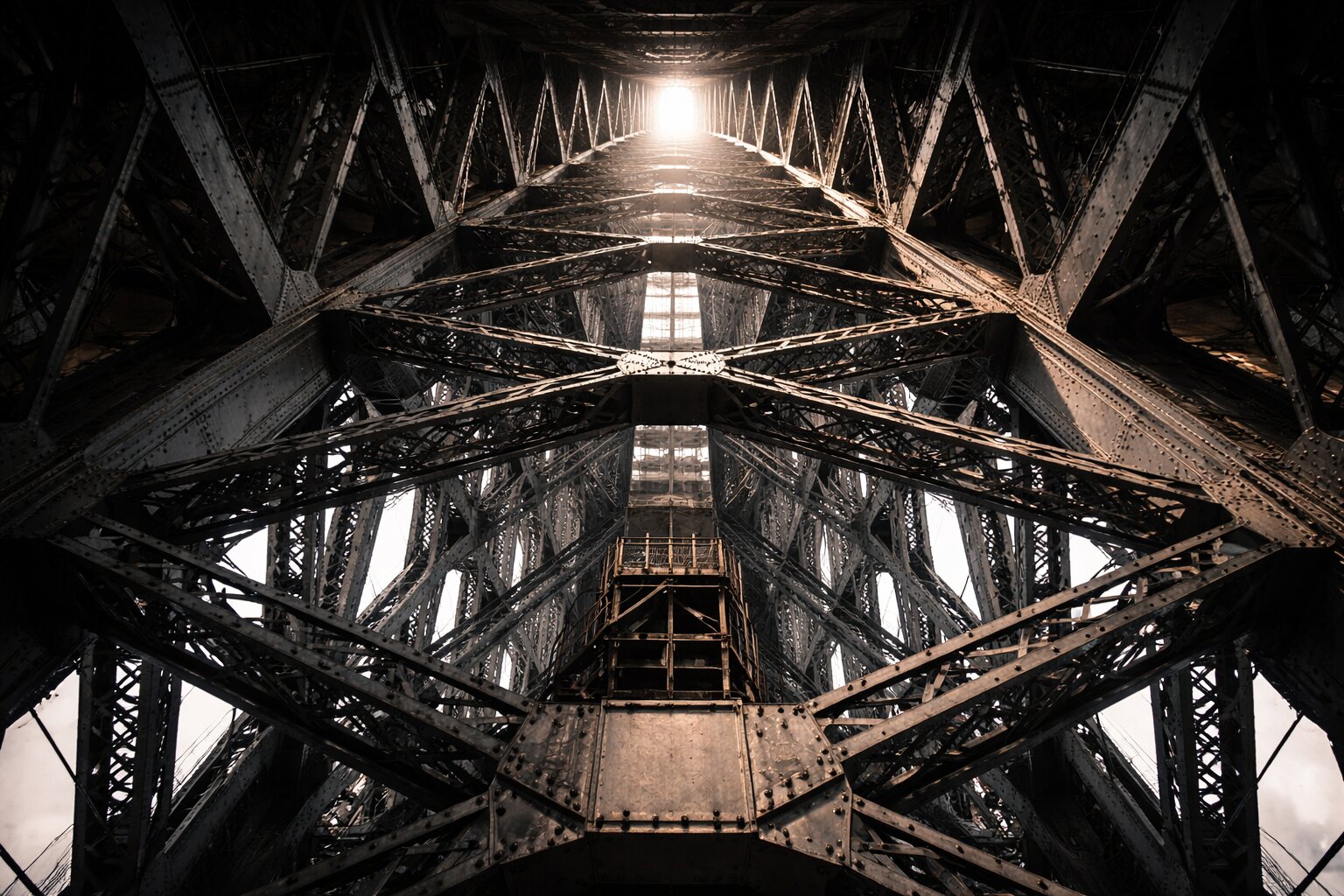
Installing new bridge maintenance units meant mounting trackwork to the arches on pedestals bolted into the structure. Fastening those pedestals meant working deep inside the bridge's confined spaces.
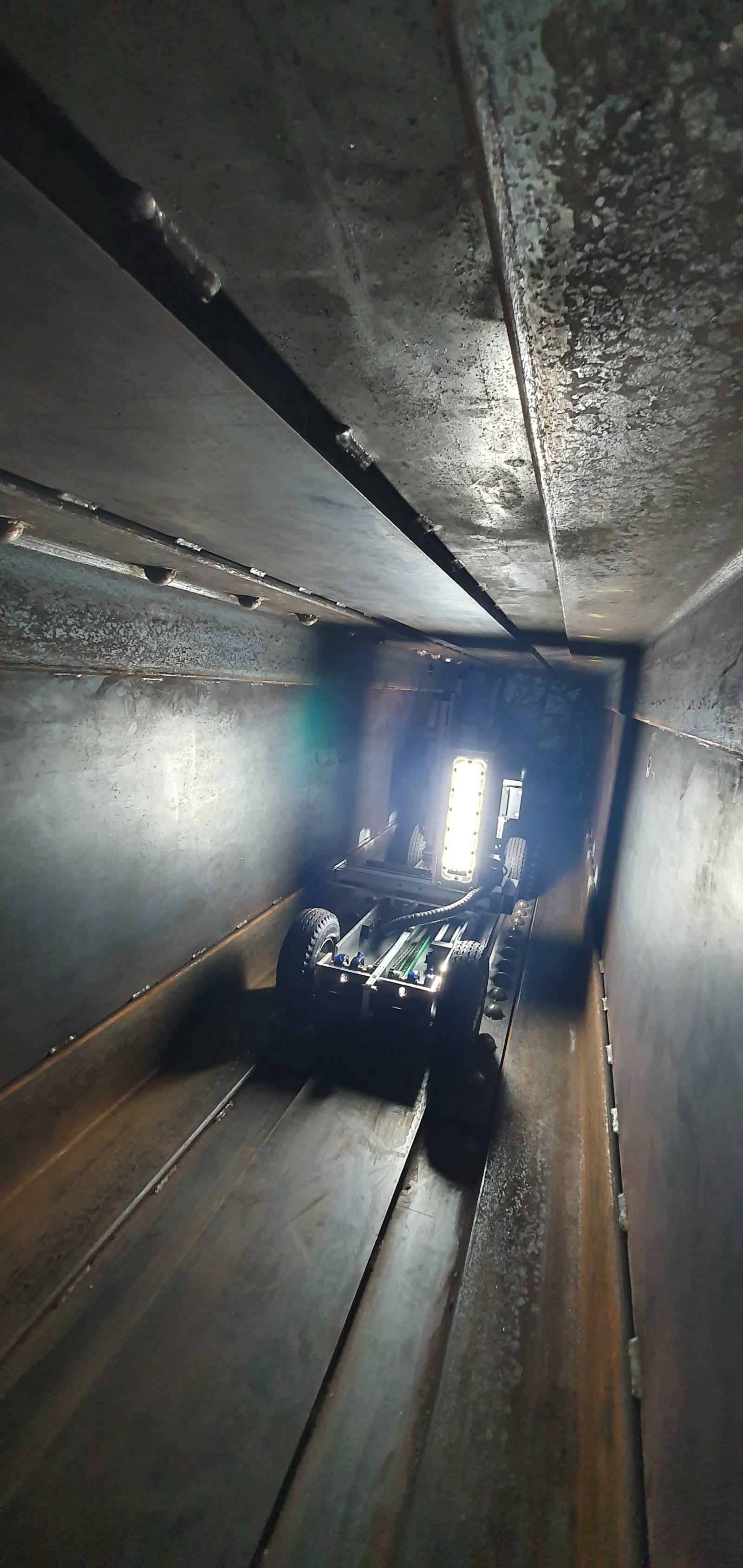
Each fixing point sat deep inside the bridge arches, in spaces a person can barely fit into.
Putting people into those confined spaces, at height, to do heavy work was a risk the project would not accept.
Every point needed an existing rivet removed, the bare steel protected, and a new bolt prepared, all in a confined space.
Old rivets and debris had to be contained, and the exposed steel protected from corrosion immediately.
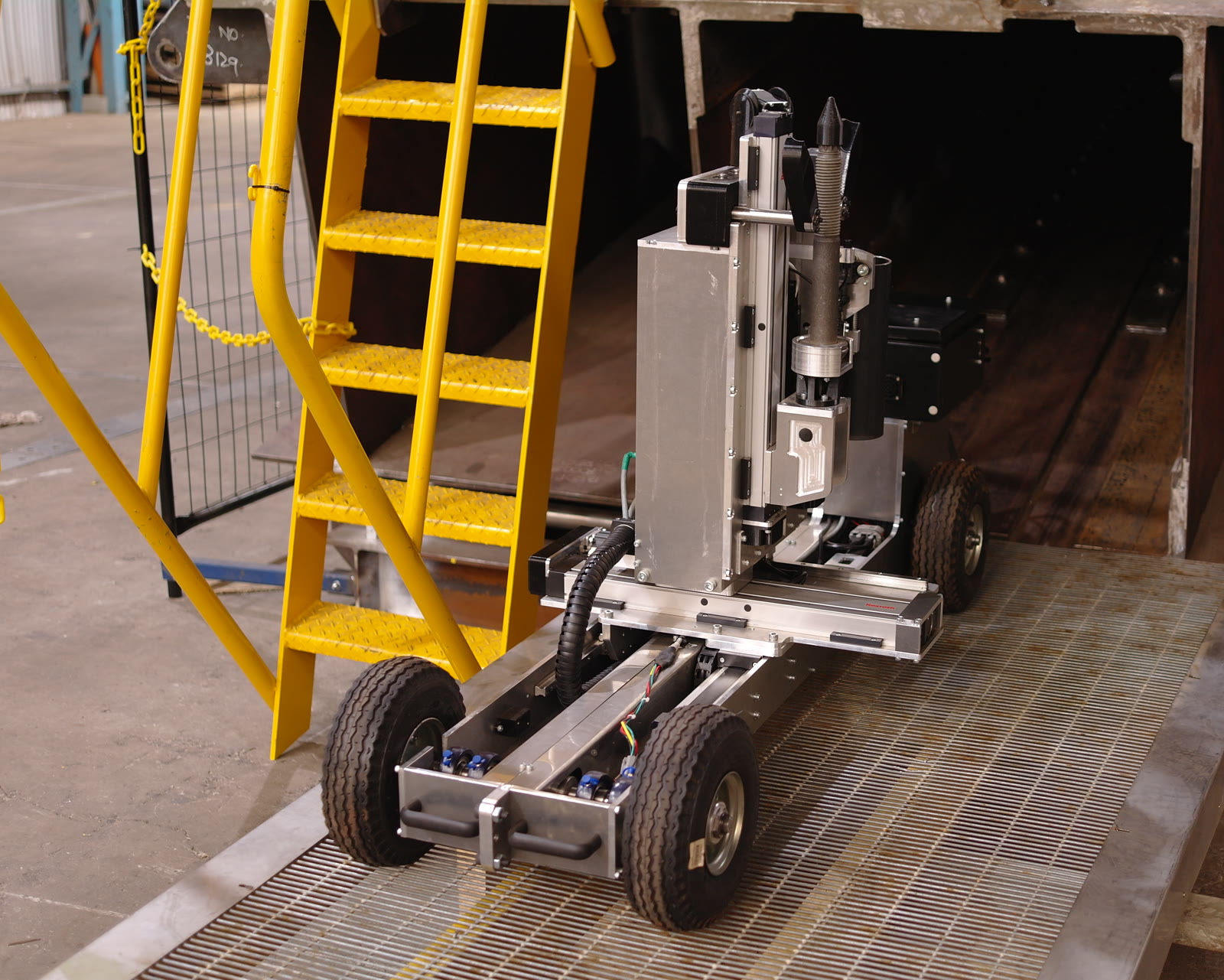
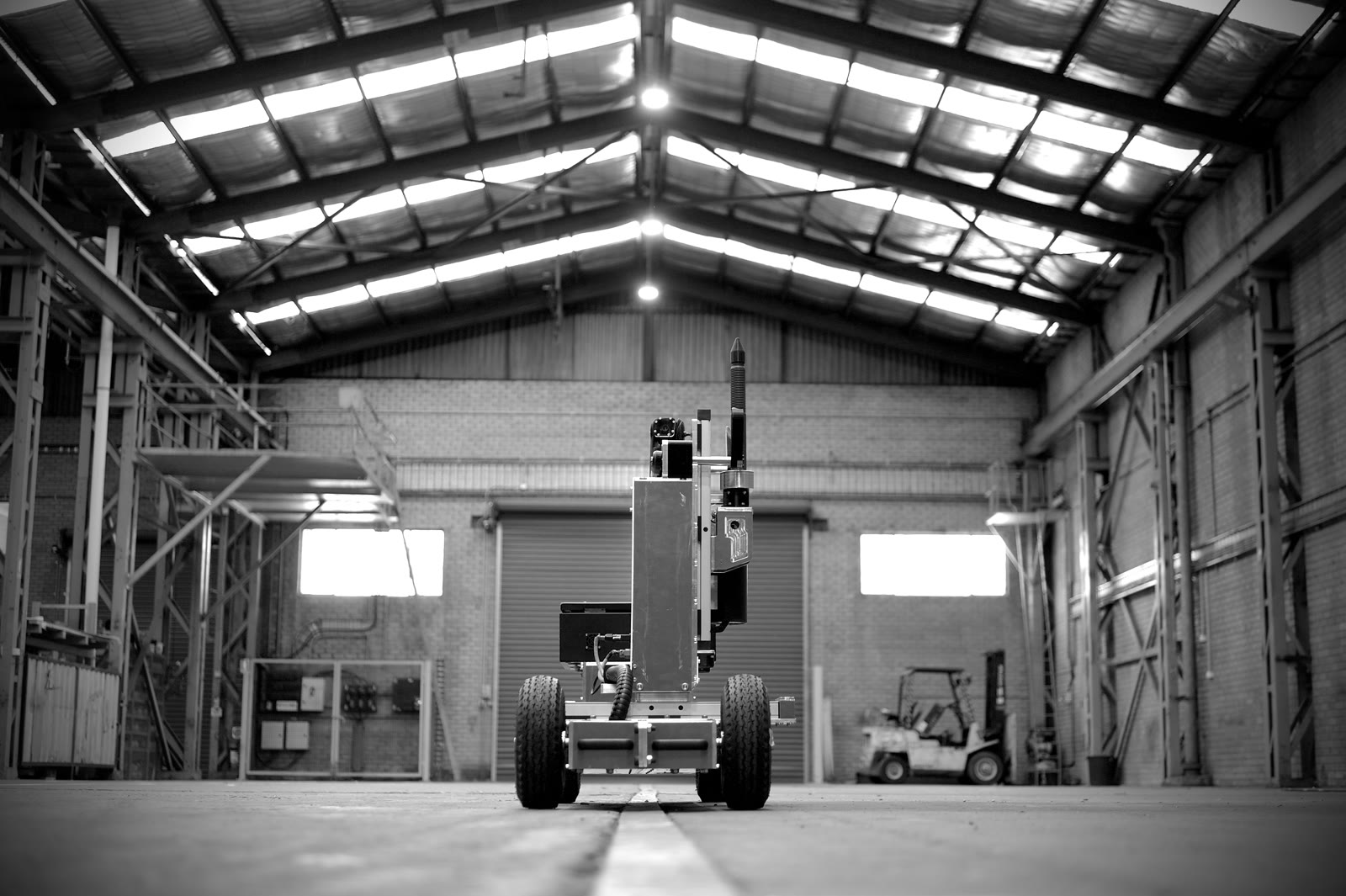
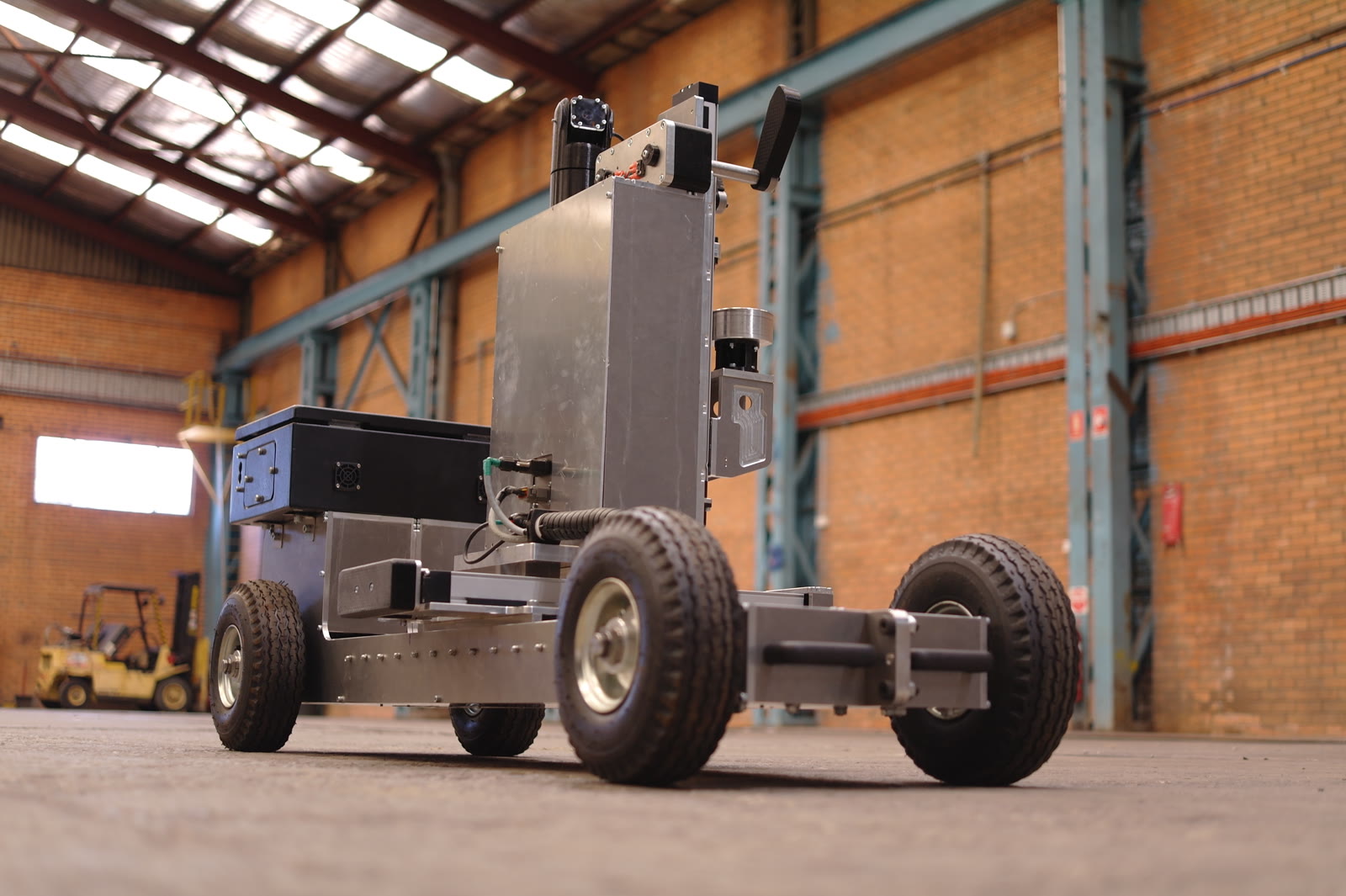
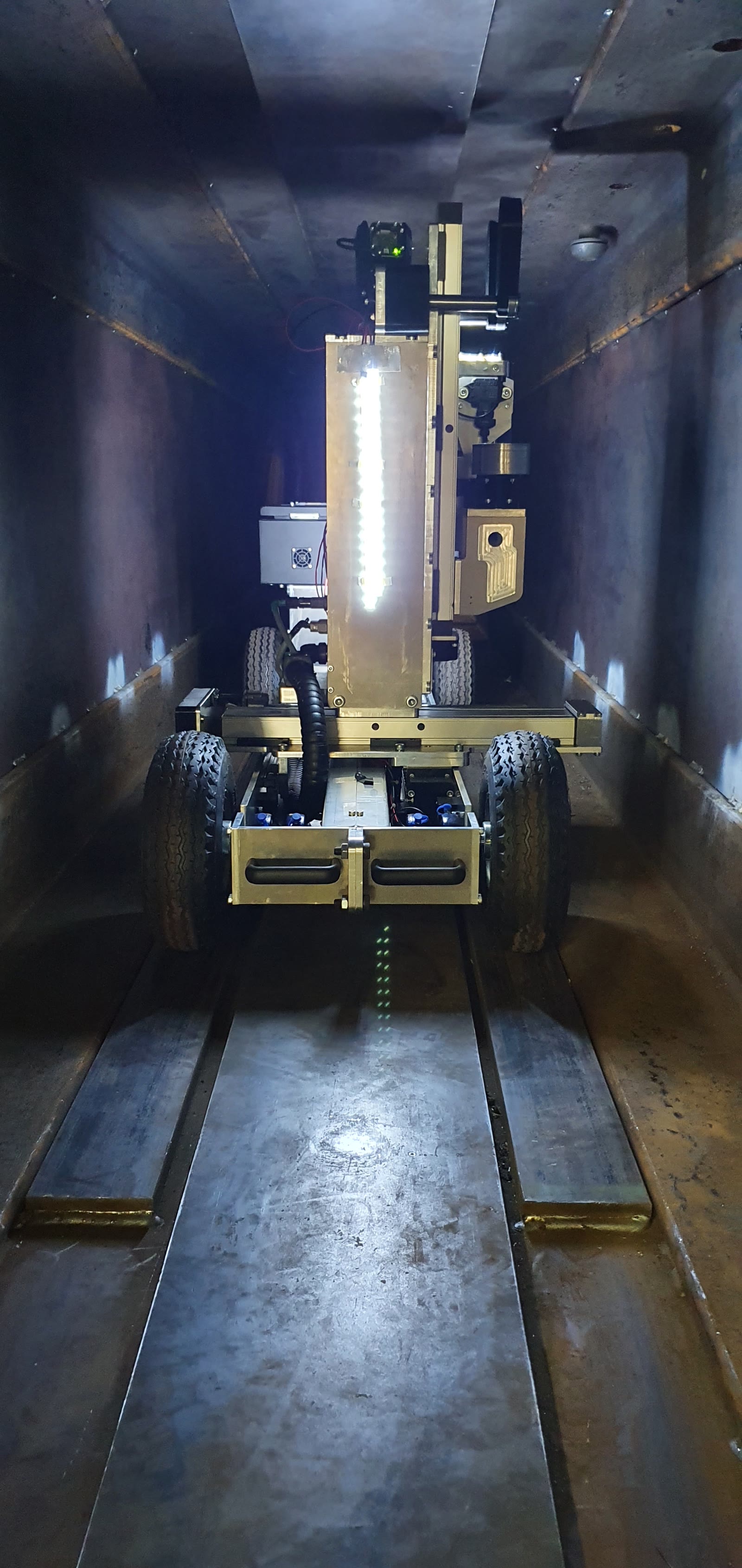
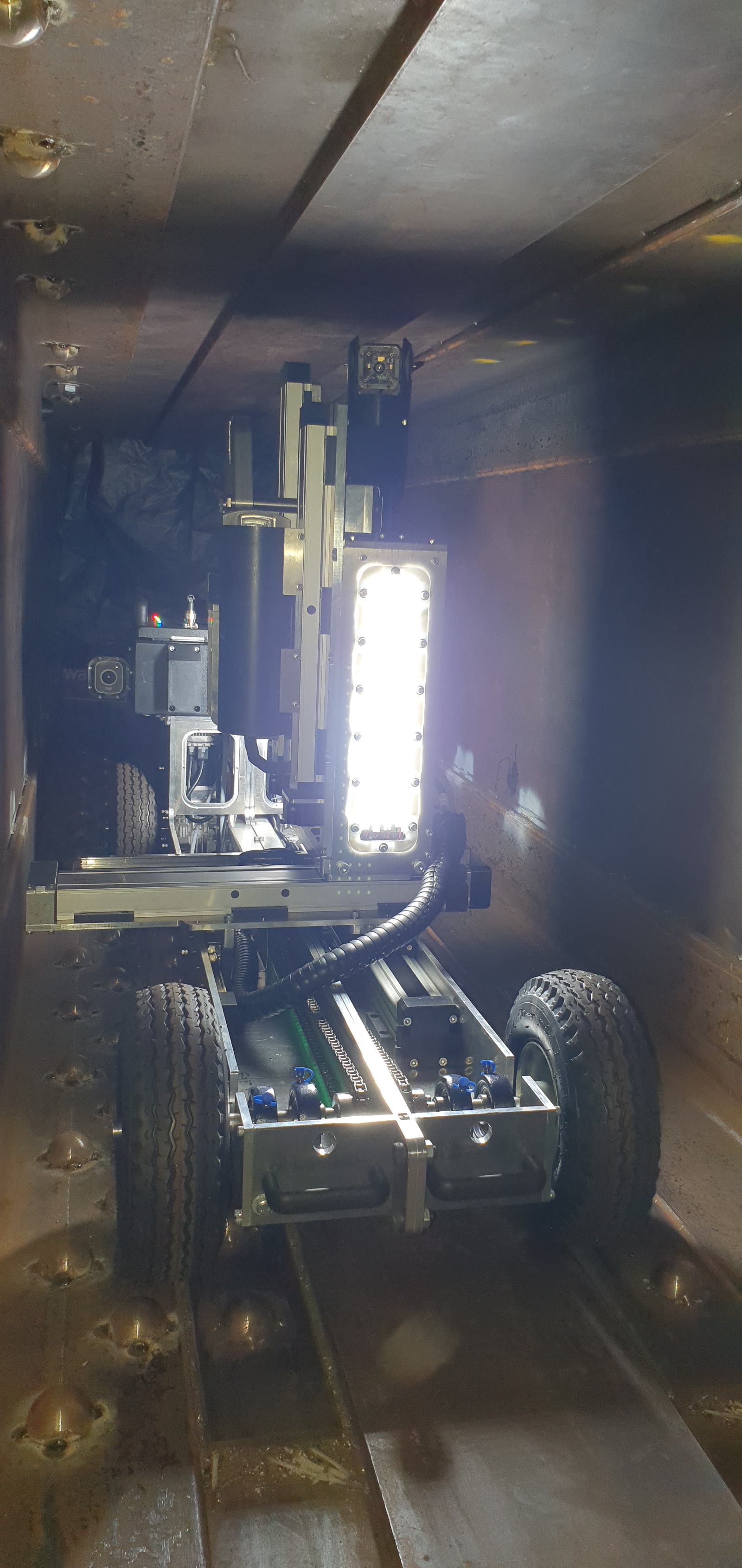
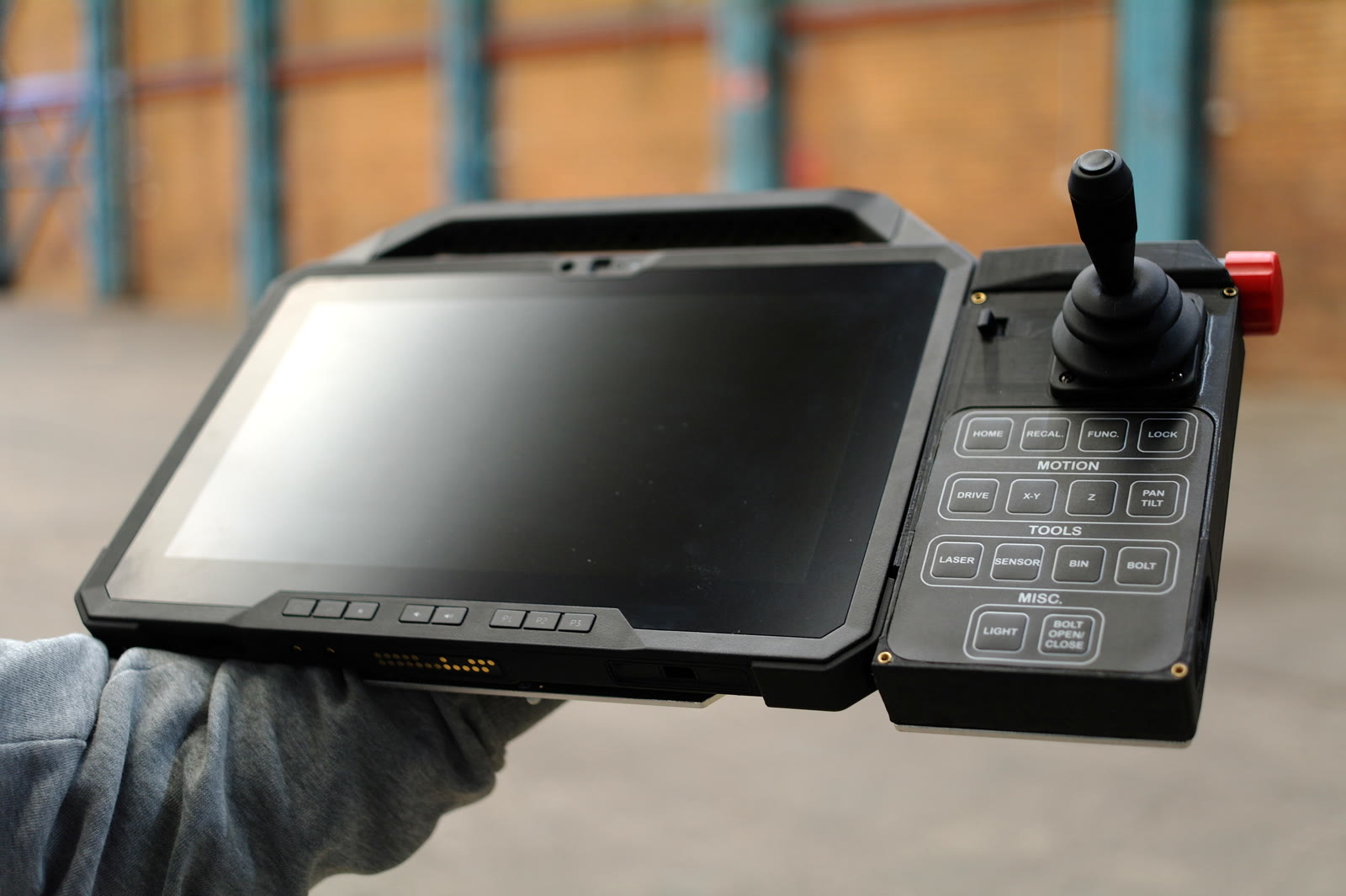
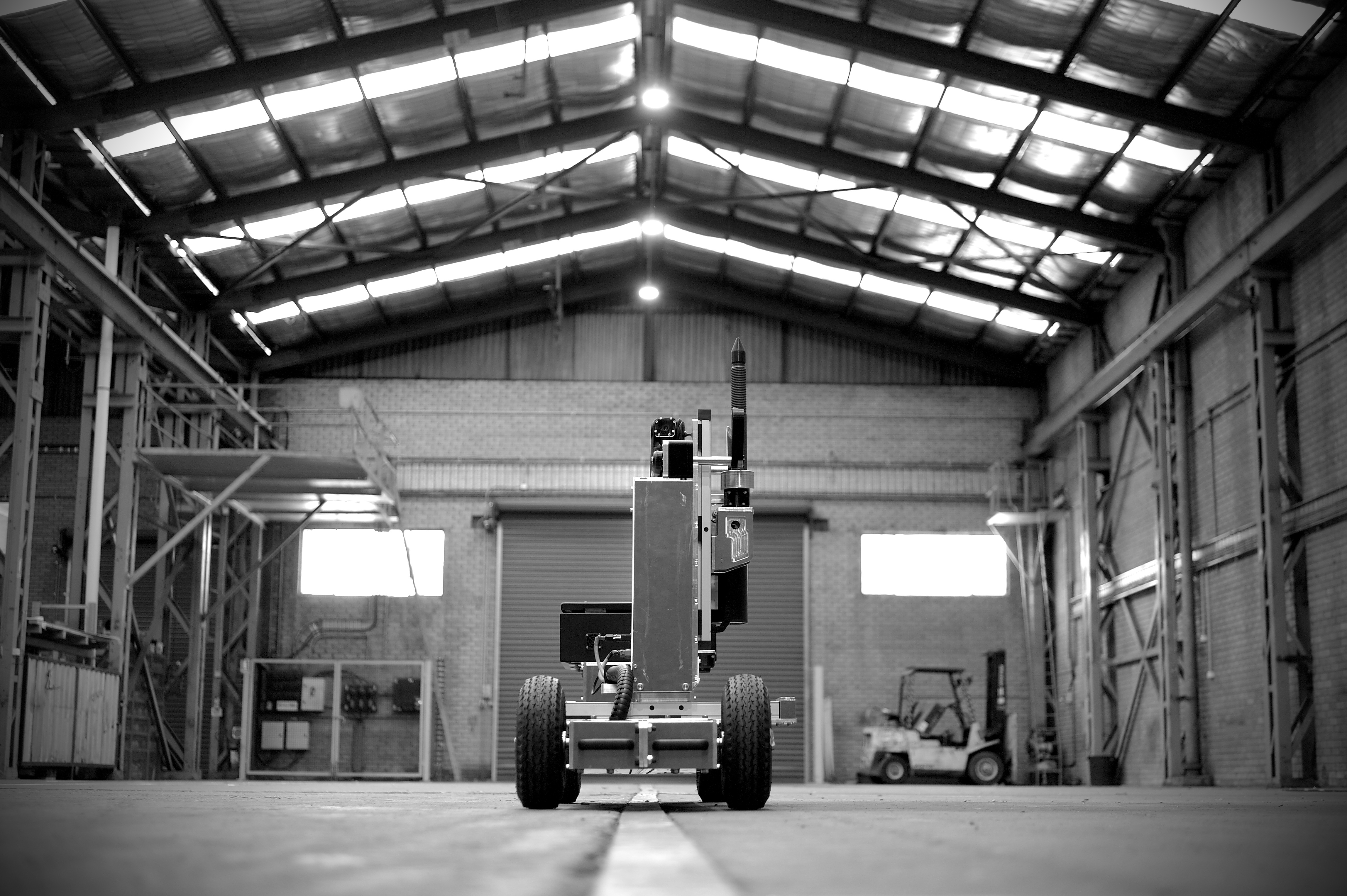
NXTGEN designed and built robots, three deployed for the program, to carry out the in-space work, so the only human task is fastening the new bolt from the outside.
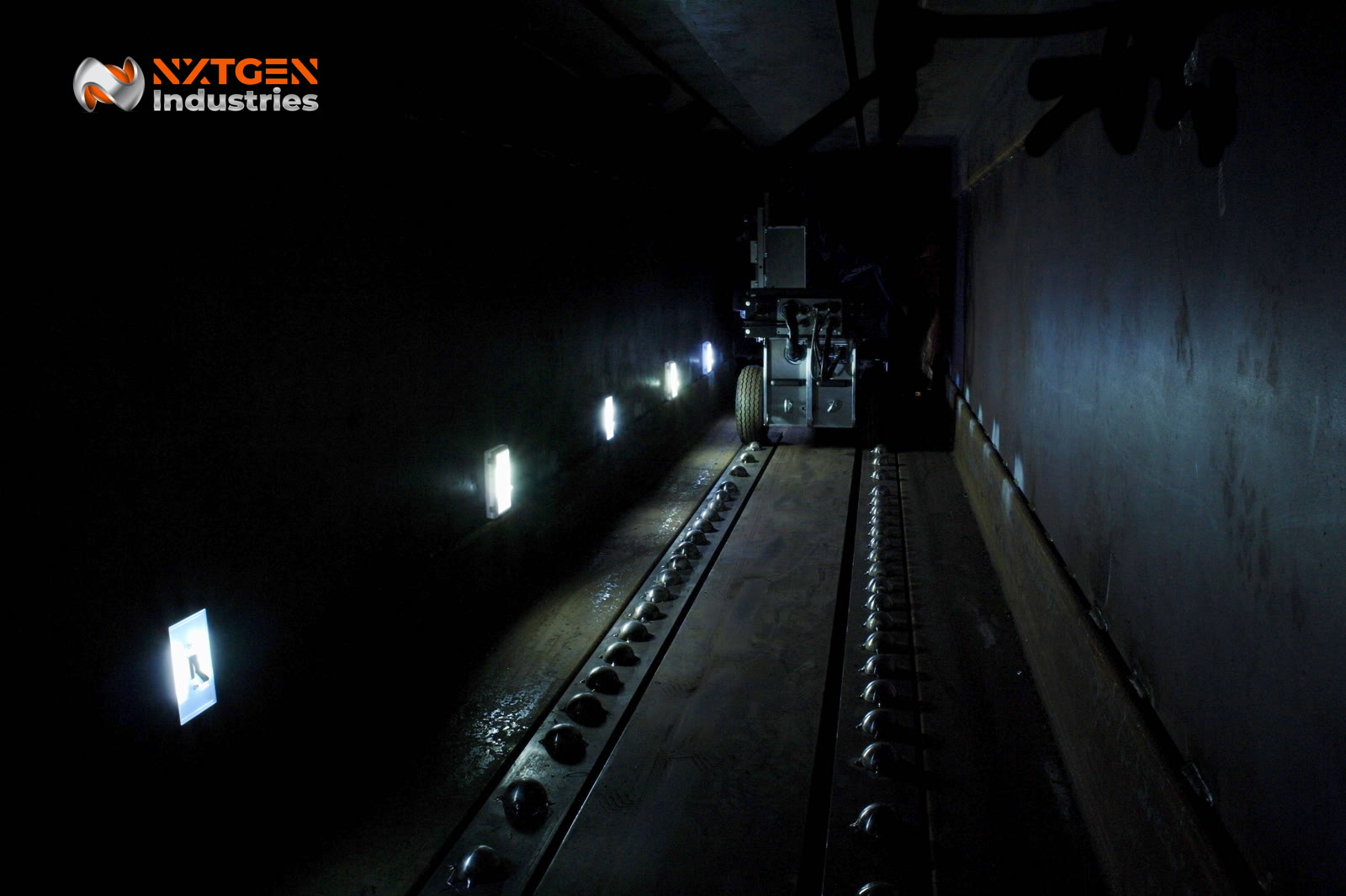
Compact robots are deployed inside the bridge arches and drive themselves to each track-pedestal fixing point, reaching spaces people can't safely enter.
At each point the robot cuts out the existing rivet with a hole saw. The old rivet drops into a contained catchment, so nothing falls inside the structure.
The robot applies thermal metal spray to the exposed area to prevent corrosion, containing the spray within the work zone.
Using an automatic tool-changing mechanism, the robot loads the new bolt, ready for a worker to fasten safely from the outside.
An onboard camera records the existing state, the full operation and the completed work, validating the construction process and confirming each new bolt is correctly installed. Every fixing leaves a verified, documented record.


Robots drive themselves to each fixing point inside the arches, reaching spaces people can't safely enter.
The existing rivet is cut out with a hole saw, in place, with no manual labour in the space.
The old rivet and debris drop into a contained catchment, so nothing falls inside the structure.
Corrosion protection applied to the exposed steel, contained to the work zone.
The robot switches tools on board to move through the full sequence without leaving the space.
The new bolt is loaded and placed, ready for a worker to fasten safely from the outside.
Records and validates the before state, the operation and the completed install, the inspection half of the job.
The highest-risk part of the job, entering the confined arch spaces, is removed entirely. Workers fasten from the outside.
Enables maintenance that could not safely proceed with people in the space.
Rivet removal, debris capture, corrosion protection and bolt loading handled in one sequence, with swarf and old rivets contained.
Robots configured to the bridge's geometry and the specific fixing sequence, three units deployed for the program.
The robot's onboard camera records every step and validates the finished install, giving an auditable record of both the construction process and the final outcome.
Demonstrates NXTGEN's ability to design and build task-specific robots for high-risk work.
See how NXTGEN's robots took people out of confined-space work inside the Sydney Harbour Bridge, replacing rivets, protecting the steel and validating every fixing.
Tell us about your confined-space maintenance challenge and we'll scope a robotic solution.
Start the conversation