
Construction / Property NXTGEN Inspect
Application

Full facade condition. No ropes. No platforms.

BMU-mounted building envelope inspection: AI defect detection and condition mapping across high-rise and commercial facades, captured during the building's normal maintenance unit operation. No drones, no dedicated rope-access campaign.

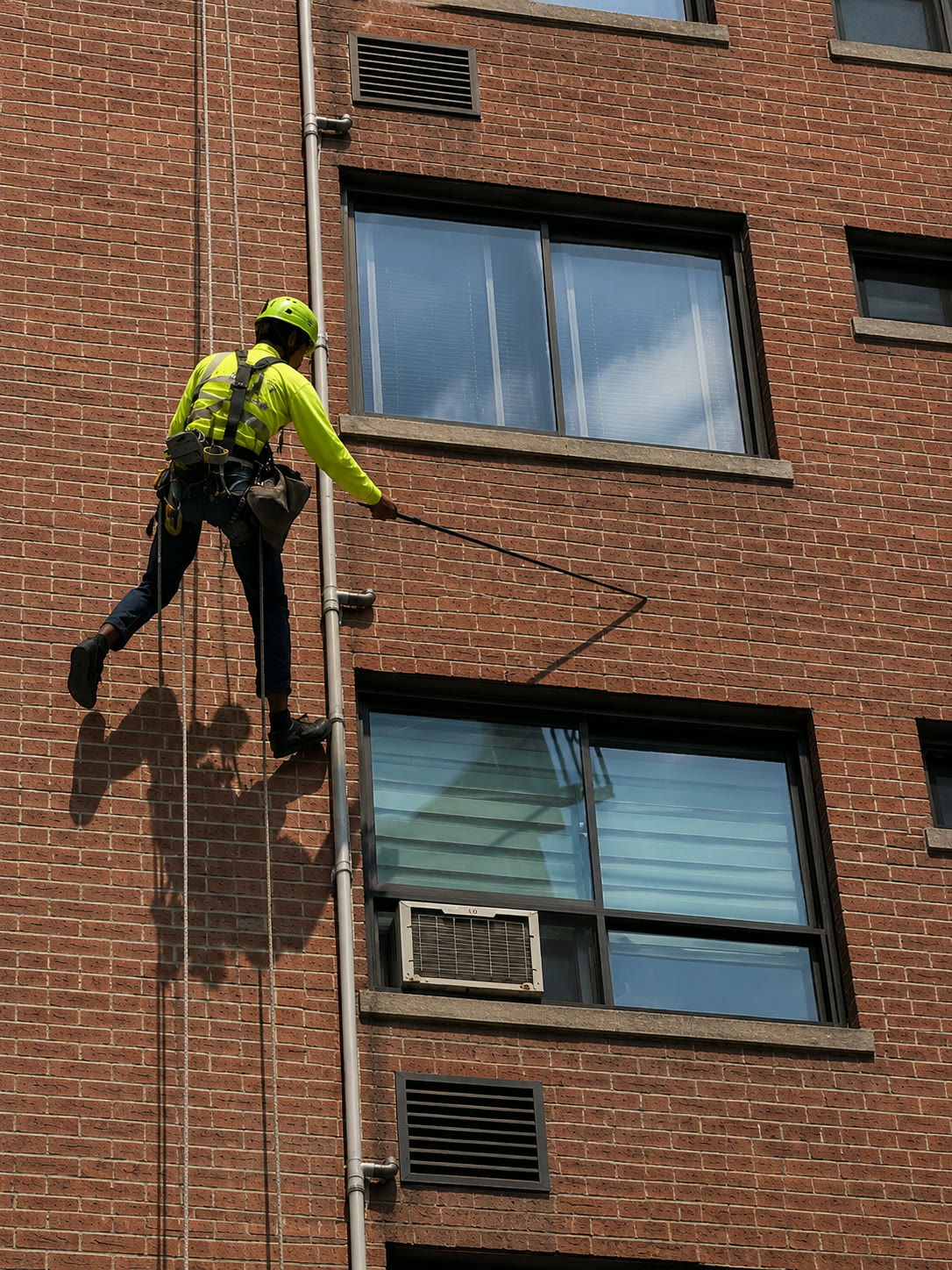
Manual inspection · rope access
The Problem

Traditional facade inspection is costly, slow and puts people at risk.

Rope access and elevated work platforms require specialist crews and extensive planning, making comprehensive facade surveys expensive, infrequent and hazardous.

  • Personnel at height

    Rope access and EWP operations expose workers to serious fall risk, requiring extensive safety planning, permits and specialist crews.

  • High mobilisation cost

    Each inspection campaign requires significant equipment hire, crew staging and access planning, making comprehensive surveys rare and expensive.

  • Infrequent inspection

    Facades are often inspected just once every five years. Condition changes constantly, so for most of that cycle you have minimal, outdated visibility of the building.

  • Crude location data

    Manual records are coarse and limited to the inspector's notes, typically a level and drop reference such as 'Level 5, drop X'. Defects are hard to pinpoint, track over time or integrate with maintenance systems.
The Solution

Every BMU pass becomes an inspection.

Capture → Upload → Analyse → Review → Report

  1. Retrofit & localise

    The inspection system is retrofitted to the building's BMU. It localises against the facade and runs within normal BMU operation, with no dedicated inspection setup required.

  2. Passive capture during operation

    As the BMU runs day-to-day window cleaning and facade maintenance, the system captures high-resolution imagery of the facade and monitors the operators in the cradle. No need to engage BMU drivers for a dedicated facade survey, so you save the cost of a separate inspection campaign.

  3. Upload and review

    Captured data is uploaded to the cloud, where AI and human reviewers analyse it and classify defects across the facade: spalling, cracking, efflorescence, water damage, sealant failure, cladding delamination and more.

  4. Condition report and ongoing monitoring

    A georeferenced condition report is generated with severity ratings per panel, an evidence pack and a maintenance schedule. Known defects are tracked over time and new defects flagged as they appear.

Hardware + software

One pass on the BMU. Every finding in the platform.

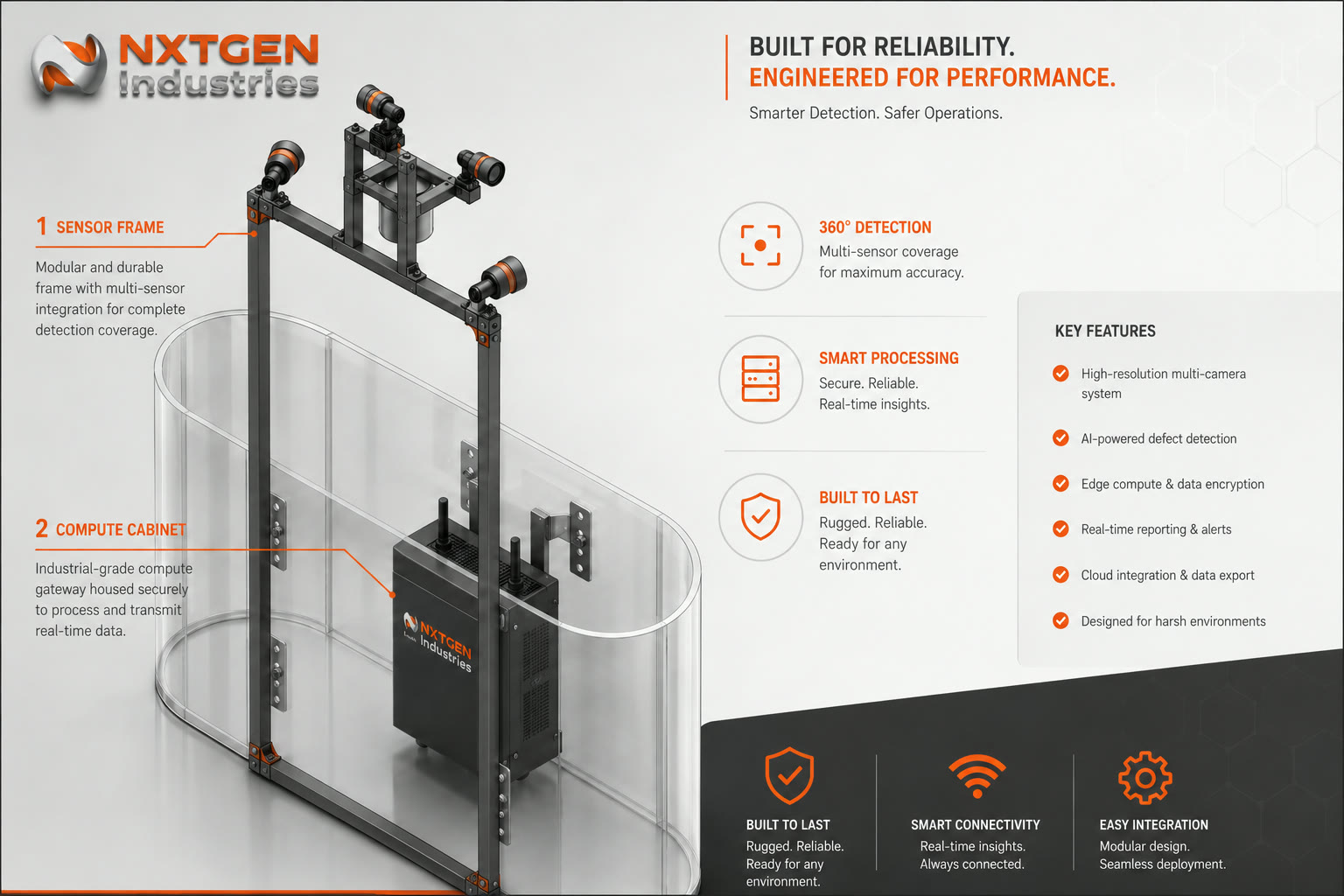
BMU-mounted capture system with a multi-camera sensor frame and compute cabinet for facade inspection
The capture system Retrofitted to the building's BMU, capturing the facade passively during normal window-cleaning and maintenance runs.
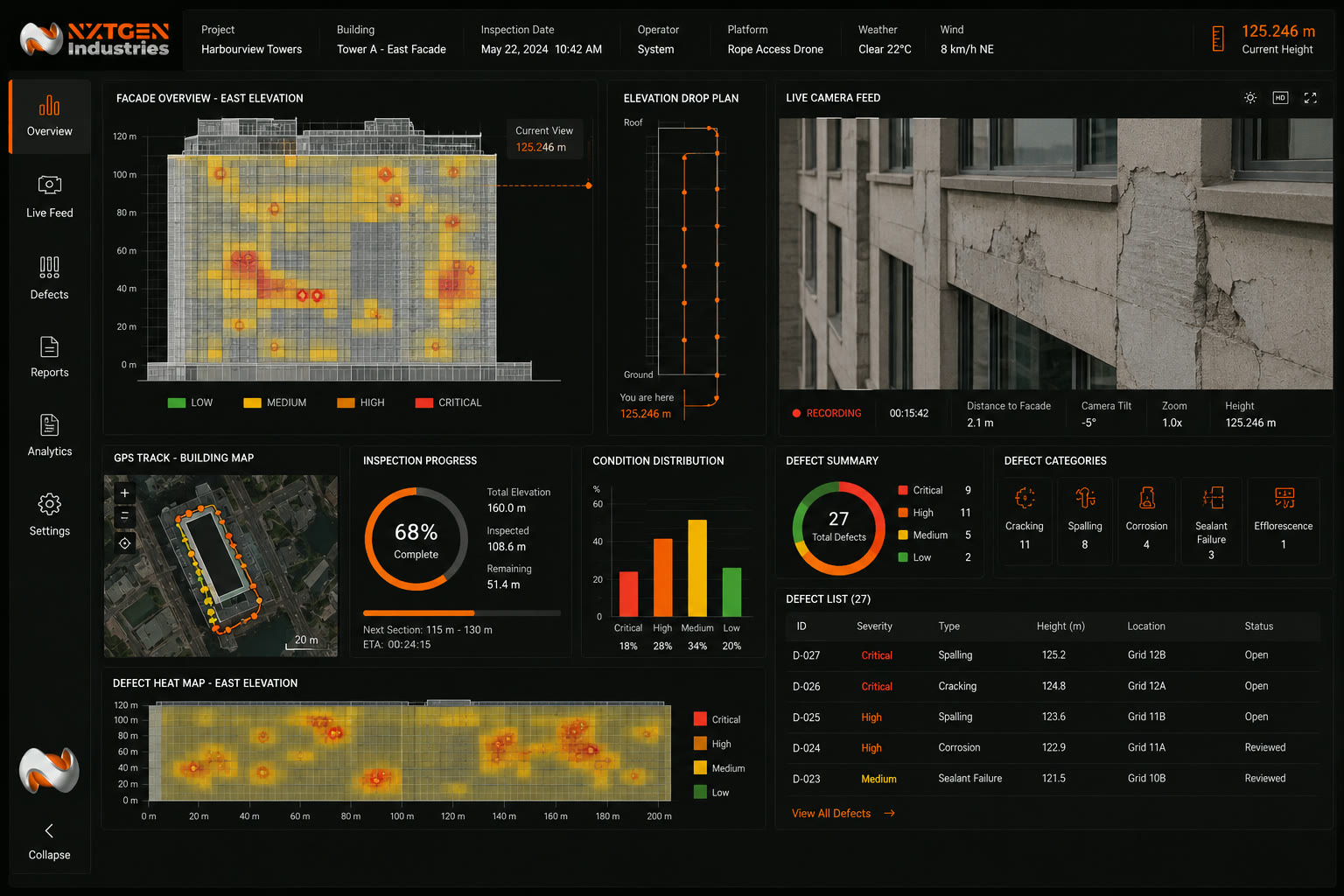
NXTGEN Inspect dashboard showing facade elevation defect heatmaps, condition distribution and a georeferenced defect map
The platform Every defect classified, georeferenced per panel, mapped and reported in NXTGEN Inspect.
AI Detection

Defects identified across the envelope.

The facade inspection system learns your facade. No two facades are the same, so the models are trained and tuned to your facade's materials, construction and conditions.

Concrete Spalling

Surface delamination and spalled sections identified by visual pattern recognition across concrete panels.

Cracking

Hairline to structural cracks classified by width, length and propagation pattern.

Surface staining & deposits

Salt crystallisation, mineral deposits and moisture-migration staining mapped across masonry and concrete surfaces.

Water Damage

Staining, discolouration and moisture infiltration zones identified by visual inspection. Thermal imaging available as an option for active or subsurface moisture.

Sealant Failure

Joint sealant deterioration, voids and adhesion failures identified between panels and at penetrations.

Cladding Delamination

Separation of facade cladding panels identified by visual inspection, with optional thermal differential for subsurface detection.

What It Delivers

Operational outcomes.

Lower inspection cost than rope access

Inspection rides the building's BMU during its normal operation, removing the crew, equipment hire and extended site presence of a rope-access campaign.

No dedicated inspection crew at height

Inspection happens during normal BMU operation, so no separate crew is sent up to survey the facade. The operators already in the cradle are monitored by the system for added safety.

Full coverage with no separate mobilisation

Inspection accumulates as the BMU runs its routine cleaning and maintenance, covering the whole envelope without a dedicated campaign, no panels missed.

Georeferenced defect map with severity and priority ratings

Every defect is spatially located on the building envelope to centimetre accuracy, rated by severity, and linked to a prioritised maintenance schedule and photographic evidence.

Deployment

Three steps to live facade inspection.

1

Scope & Fit

The inspection system is retrofitted to the building's BMU. Access, scope and the inspection plan are agreed with the building manager.

2

System Commissioning

The system is calibrated against a representative facade section and validated before live operation. A thermal baseline is established only where thermal is included.

3

Reporting Integration

Condition reports are delivered as PDFs and digitally on the NXTGEN Inspect platform, and integrated with your existing building maintenance management system. As inspections accumulate through normal BMU operation, the AI models are tuned continuously, so detection improves over time.

Ready to turn every BMU pass into an inspection?

Tell us about your building and inspection requirements.

Start the conversation