Mining NXTGEN Inspect
Application

Know when to grade. Keep haul roads safe.

AI road surface monitoring from cameras on your existing fleet, showing when and where to grade to keep haul roads safe, productive and easy on equipment.
The Problem

Grading by schedule, not condition, costs safety and money.

Haul roads deteriorate fast under heavy loads, and grading on a fixed schedule means decisions made without current condition data.

Safety risk

Potholes, rutting and corrugation raise the risk of incidents, loss of control and damage to operators and equipment.

Reactive grading

Grading on a fixed schedule sends graders to roads that don't need it and misses roads that do, wasting grader hours.

The hidden cost of rough roads

Deteriorated surfaces accelerate tyre and suspension wear, slow cycle times and burn extra fuel.

No objective condition data

Without continuous data, grading and maintenance decisions rely on operator reports and guesswork.

The Solution

Camera in. AI on. Grade where it counts.

  1. Continuous image capture

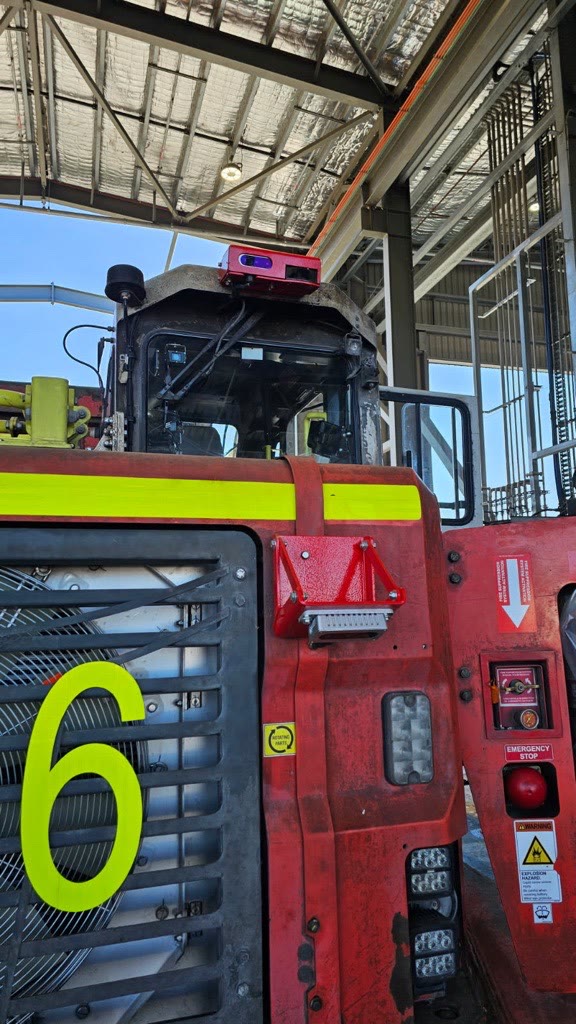
    Cameras mounted on your existing haul trucks and light vehicles capture road surface imagery as they run, with no dedicated survey vehicle required.

  2. AI defect detection

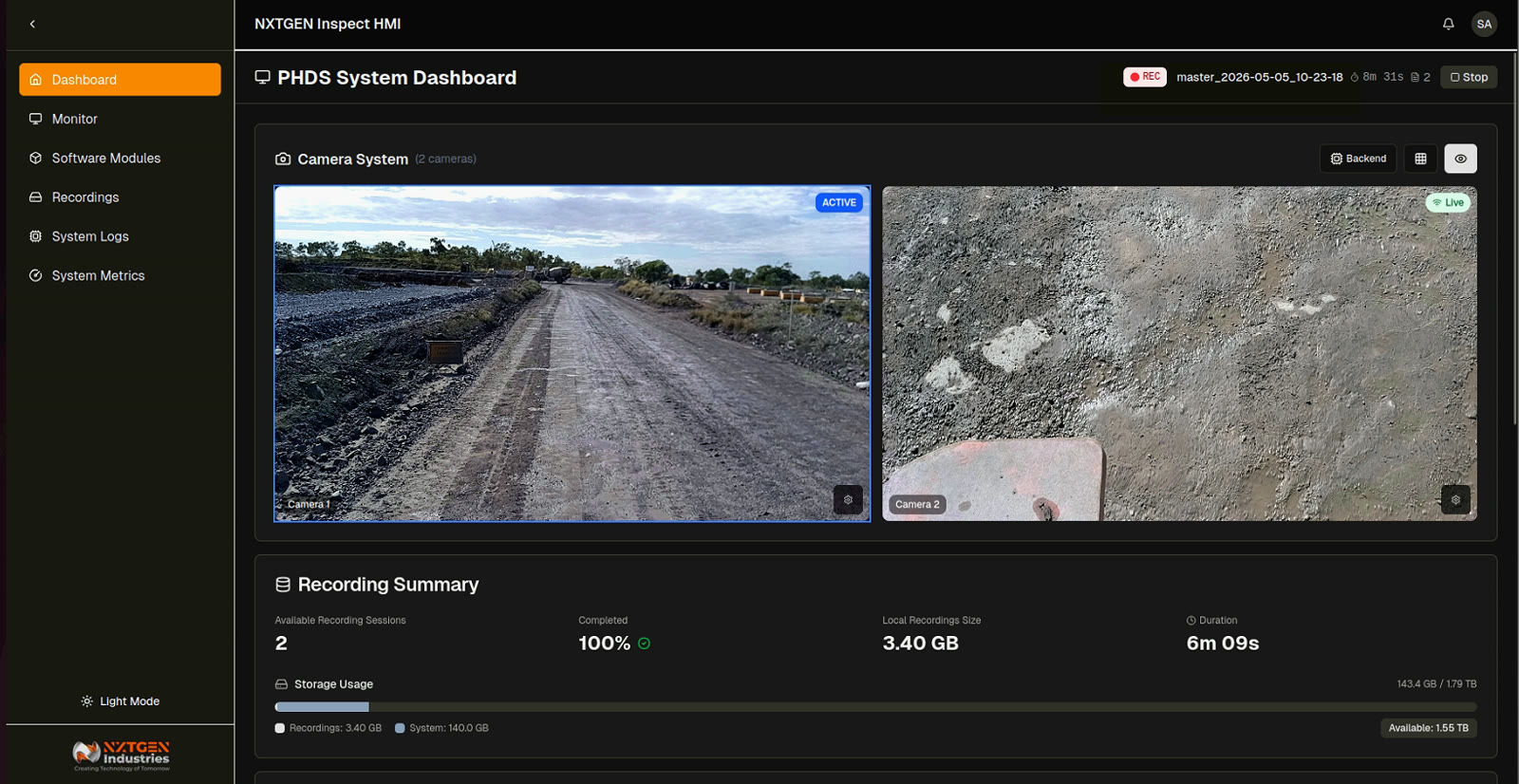
    NXTGEN Inspect detects and classifies potholes, corrugation, rutting and surface loss in real time from the captured imagery.

  3. GPS-tagged condition map

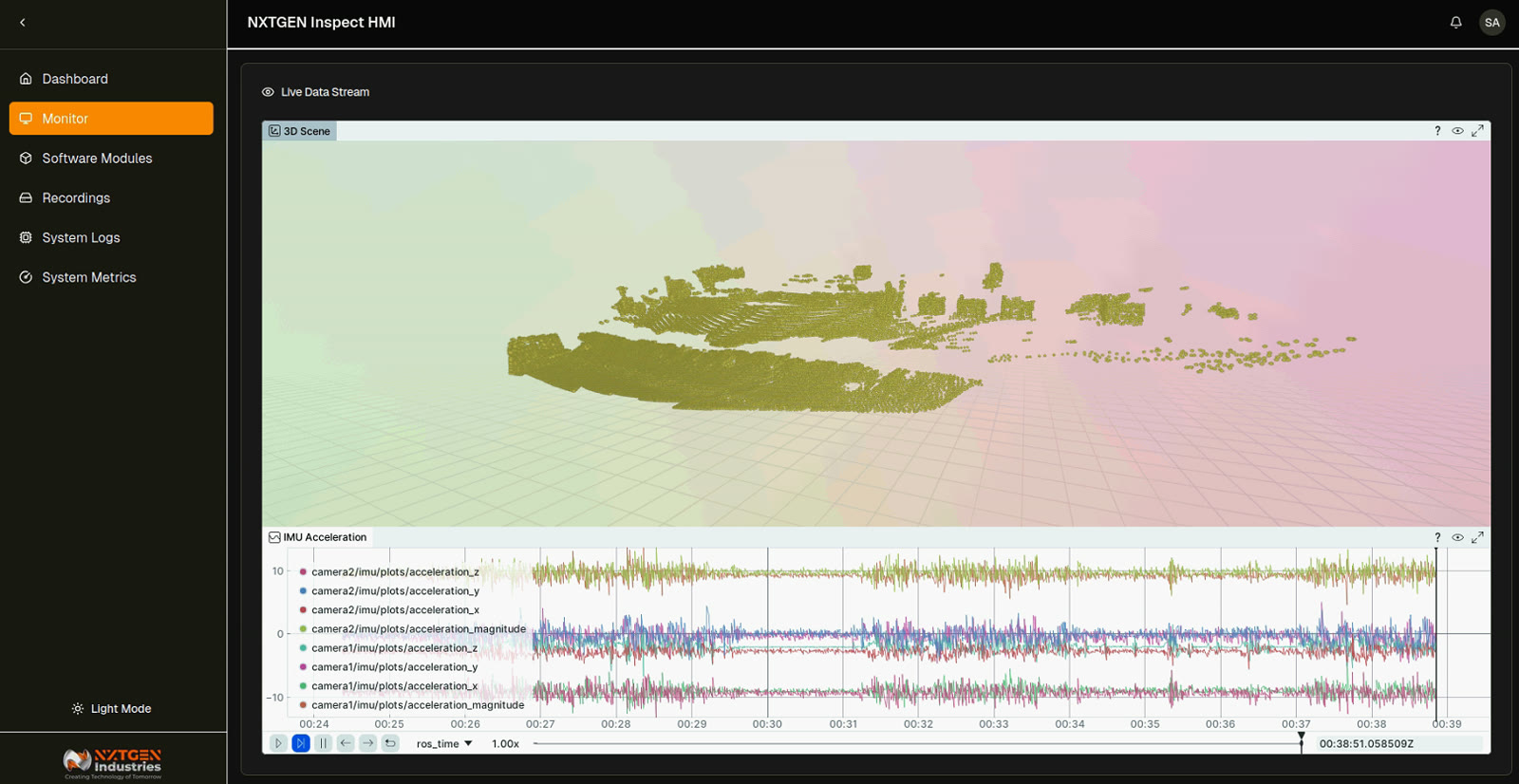
    Every detected defect is mapped to GPS coordinates with severity scoring, building a continuously updated condition picture of the haul road network.

  4. Prioritised grading schedule

    AI analysis generates a ranked grading and maintenance schedule, highest severity sections first, with location and evidence attached.

In The Field

Haul road monitoring in action.

AI Detection

What the platform identifies.

Potholes

Detected by size, depth profile and location with severity classification.

Corrugation

Washboard surface patterns detected across the haul road, a key grading trigger.

Rutting

Wheel-track deformation and depressions indicating surface and structural deterioration.

Surface degradation / loose material

Loss of surface, ravelling and loose material across the road.

Edge & windrow condition

Road edge deterioration and windrow/berm condition along the haul road.

Standing water / drainage

Ponding and drainage issues that accelerate road deterioration.

Configured to your site. We tailor the detection set to your haul road network and conditions.

What It Delivers

Operational outcomes.

Grade on condition, not schedule

Send graders where the data says, reducing wasted grader hours and keeping every road in spec.

Safer haul roads

Continuous monitoring catches hazards early, reducing incident risk for operators and equipment.

Lower running costs

Smoother roads cut tyre and suspension wear, improve cycle times and reduce fuel burn.

Continuous condition data

Every haul road monitored on every pass, GPS-tagged with severity, with no dedicated survey vehicle.

Deployment

Three steps to live monitoring.

1

Scope & Configure

We scope your haul road network, review existing data and configure the platform to your defect standards and reporting requirements.

2

Commissioning

Camera systems are commissioned to your vehicles and the AI models calibrated to your surface types and local defect definitions.

3

Operation

Continuous condition mapping begins from the first run. Your team receives live condition updates and a prioritised grading schedule. AI models are tuned continuously as new runs come in, so detection keeps improving over time.

See It In Action

Mining haul road grading in deployment.

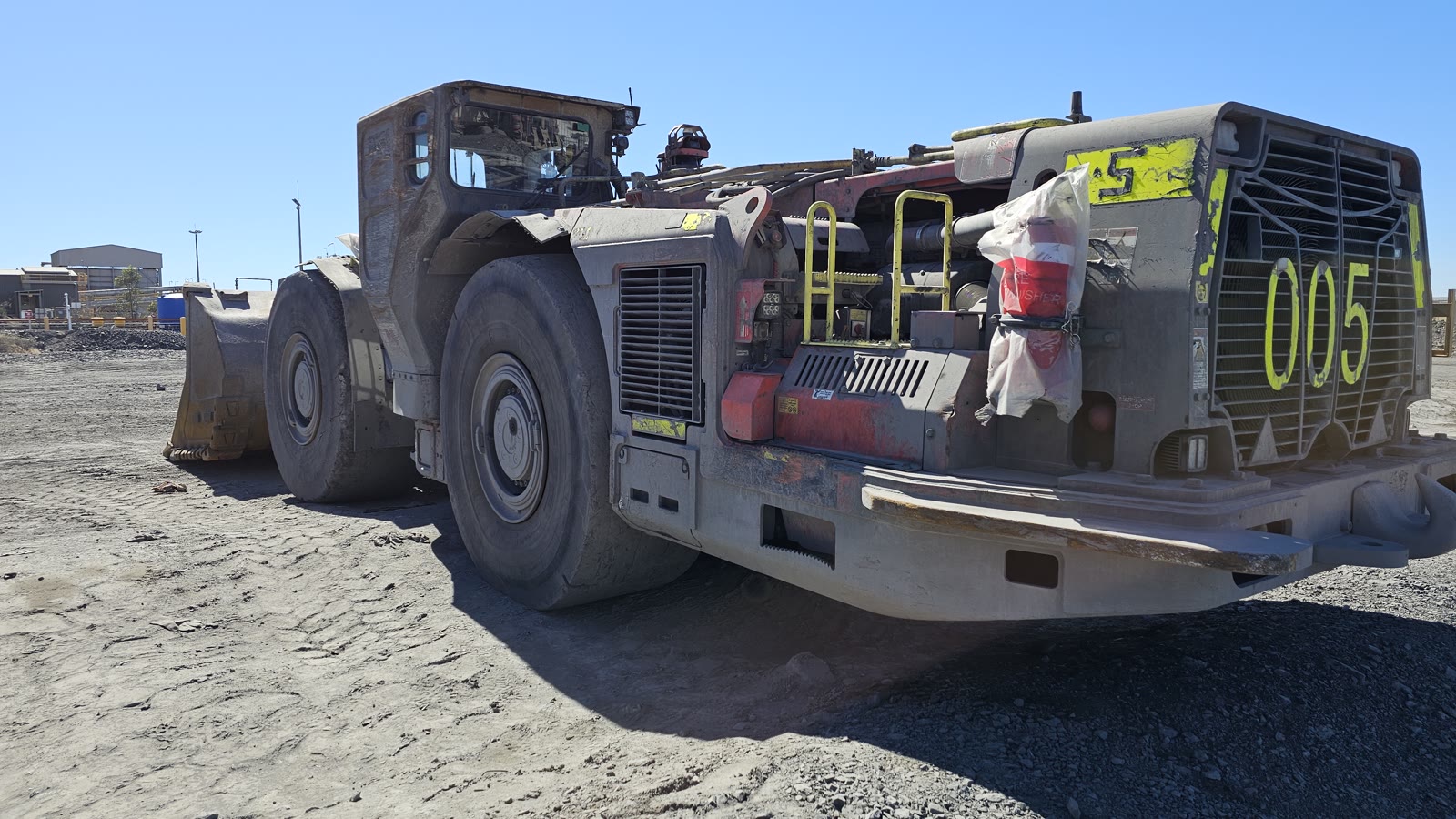
Mining haul road monitoring deployment
Case Study

Mining Haul Road Grading

See how NXTGEN Inspect monitors haul road condition from cameras on the existing fleet, turning continuous data into a prioritised grading schedule.

Read the case study

Ready to grade on condition, not schedule?

Tell us about your haul road network and monitoring requirements.

Start the conversation