Rail NXTGEN Inspect
RAIL OPERATIONS

Autonomous Train Inspection Systems

Automated AI inspection of rolling stock exteriors at depot entry points, continuously detecting graffiti, collision damage, panel defects, and door anomalies without slowing fleet operations.

The Problem

Manual body inspection is thorough work, done under tight turnaround pressure.

Rail operators already keep strong records and apply consistent standards. The opportunity is to make body inspection faster and more thorough, measure defects more precisely, and capture an even richer condition record on every pass.

Time-intensive inspection

Walking every carriage by hand consumes valuable turnaround time and creates scheduling pressure at peak periods.

Thoroughness under pressure

Covering every panel, seal and fixing to the same standard, every time, is hard to sustain when turnaround windows are tight.

Measurement by eye

Subtle changes like panel deformation or door alignment are hard to measure precisely and repeatably by hand.

Room for richer records

Records are already good. Adding consistent photographic and measured evidence on every pass makes defect trending and history stronger still.

The Solution

Capture in. AI on. Reports out.

  1. Data capture

    Inspection data is captured by either an autonomous inspection robot or smart sensor payloads, imaging the full exterior of the rolling stock.

  2. Upload and AI analysis

    The captured data is uploaded to NXTGEN Inspect, where AI analyses it and classifies defects such as graffiti, panel dents, scratches, window damage, door misalignment and coupling anomalies.

  3. Human review

    An inspector reviews the AI findings and confirms, flags or dismisses each one, so every defect that reaches a report is verified.

  4. Reports generated

    Structured condition reports are generated per vehicle, with annotated imagery and maintenance priorities, ready to act on.

In the Field

Autonomous inspection, deployed at the depot.

AI Detection

What the platform identifies.

Graffiti Detection

New graffiti identified on any exterior surface, with location annotated and size estimated for remediation scheduling

Panel Dents & Scratches

Impact damage, surface scratches, and panel deformation across carriage exterior panels and corners

Window Damage

Cracked, scratched, or broken windows and window seal failures across all carriages

Door Alignment

Door misalignment, gap anomalies, and seal failures that may affect passenger safety or service compliance

Coupling Anomalies

Visible coupling damage, misalignment, or foreign object entanglement at inter-carriage connections

Lighting & Signage Faults

Missing, damaged, or obscured exterior lighting, route indicators, and mandatory signage panels

What It Delivers

Operational outcomes.

30-Second Fleet Check

Every passing train is fully inspected in under 30 seconds, with no technician involvement required for the initial defect pass.

Consistent Pre-Service Standards

The same detection criteria applied to every train, regardless of shift, time of day, or workload pressure.

Complete Inspection History

A photographic record of every train body at every inspection, enabling condition trend tracking and warranty claims.

Faster Defect-to-Repair Cycle

Automatic maintenance notifications with annotated imagery reduce the time from defect detection to workshop scheduling.

See It In Action

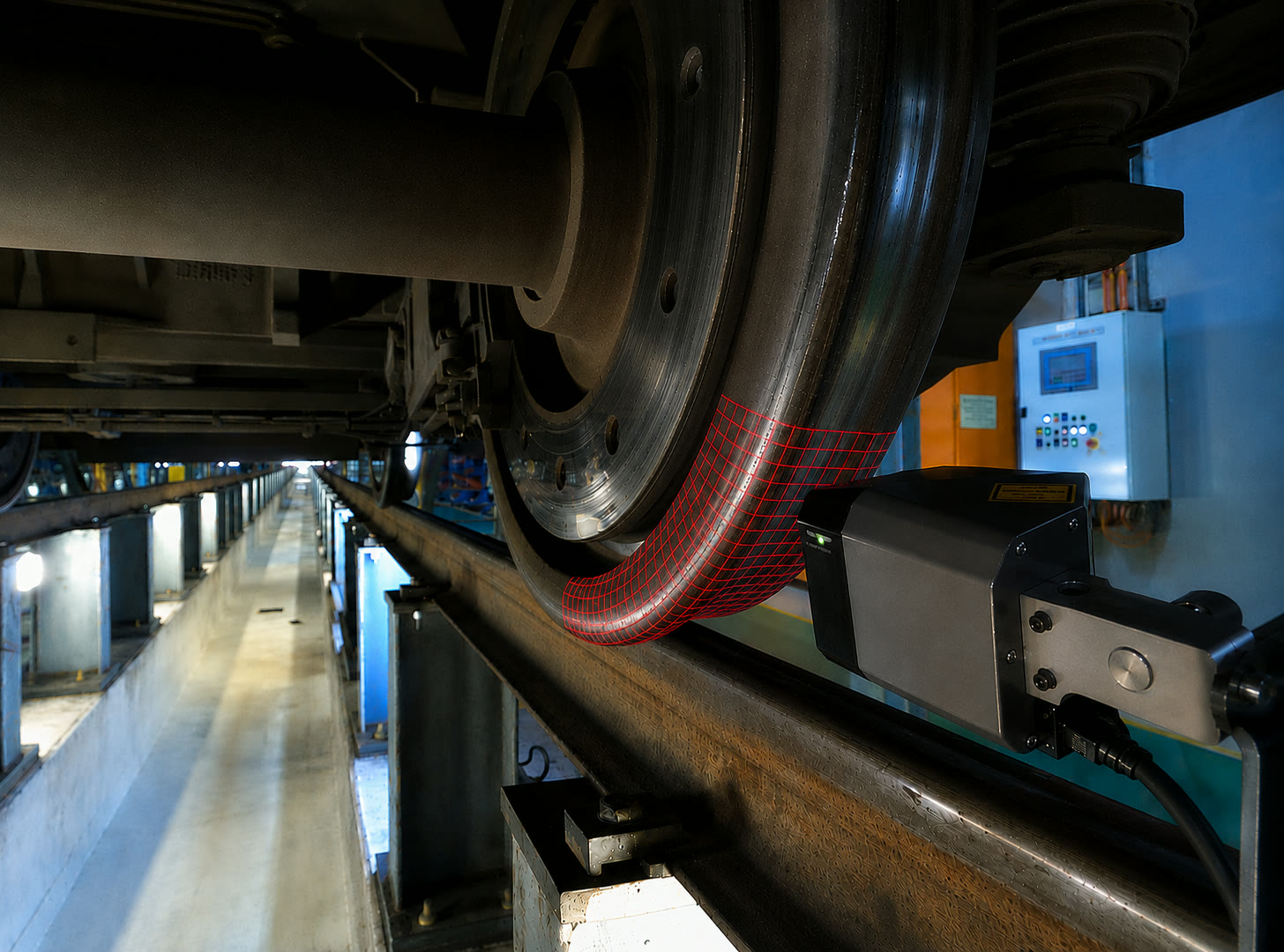
Train Undercarriage Inspection in deployment.

Train undercarriage inspection deployment
Case Study

Train Undercarriage Inspection

See how the Train Undercarriage Inspection platform was deployed — from installation to live fleet defect detection and maintenance alerting.

Ready to automate your pre-service fleet inspection?

Tell us about your depot operations and rolling stock inspection requirements.

Start the conversation