Tunnels
NXTGEN Inspect
NXTGEN Flow
Tunnel jet fan inspection runs on closures. Every inspection cycle requires the tunnel to be closed, typically in the early hours, at significant cost and operational disruption to the network. The pressure is to complete as many fan inspections as possible within each closure window, because every closure that doesn't finish the job means scheduling another one.
Traditional inspection makes that hard. To assess fan blades properly, inspectors have historically needed to enter the fan housing, a confined space suspended from the tunnel ceiling. The entry procedure alone demands confined space permits, standby rescue personnel, and a dedicated operator on watch. Set-up and safe-entry overhead consumes closure time that could be spent inspecting more fans.
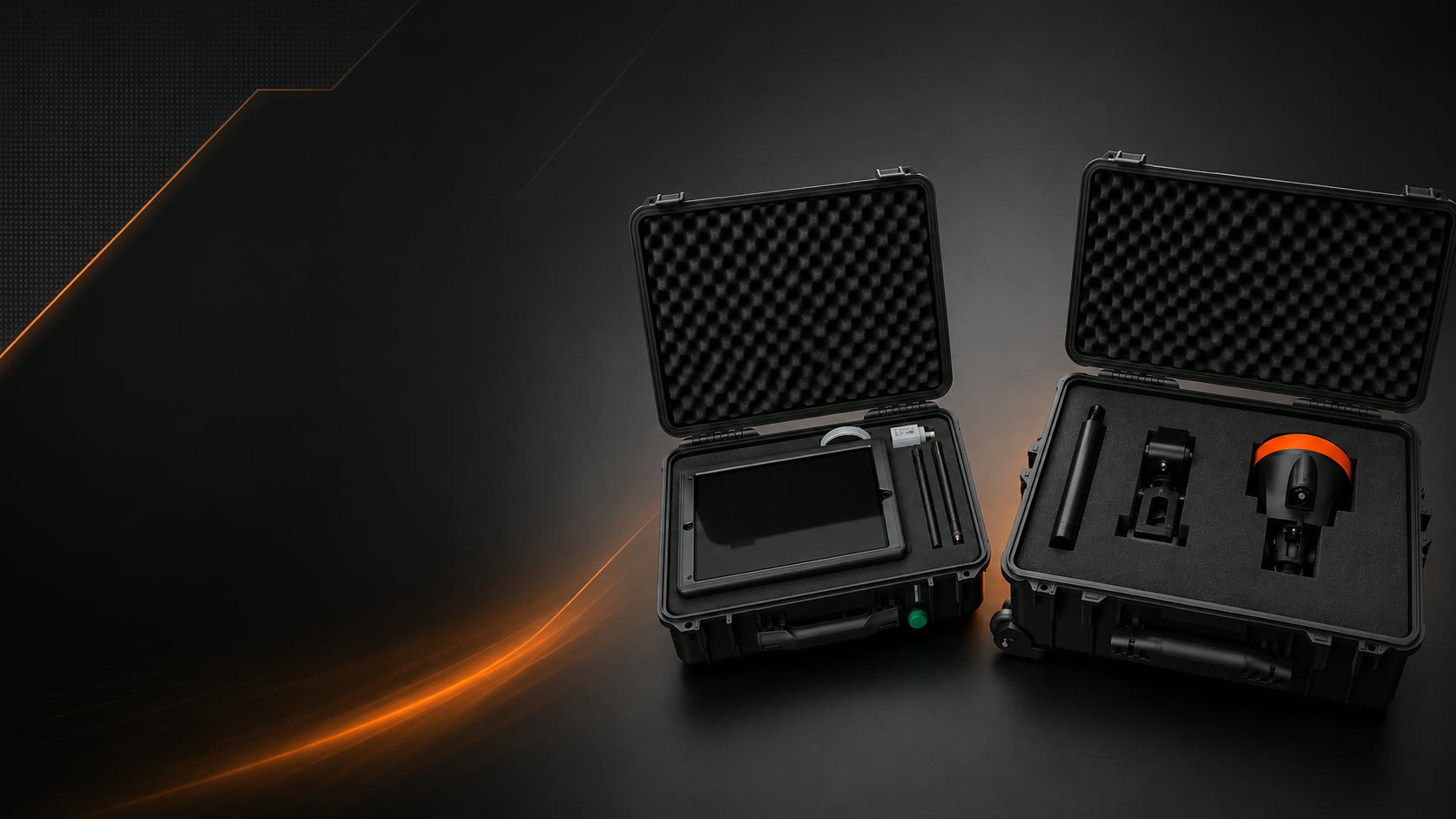
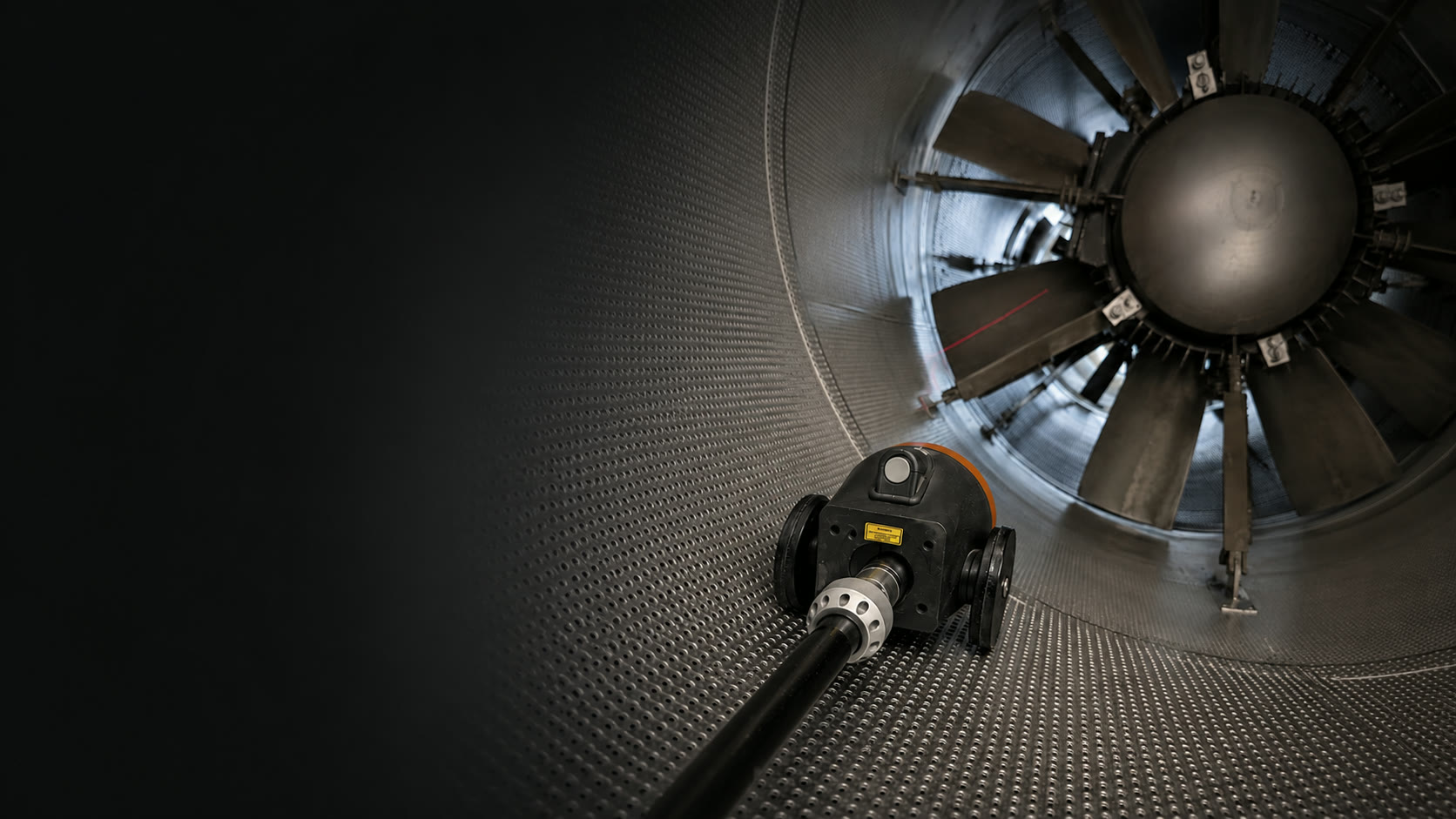
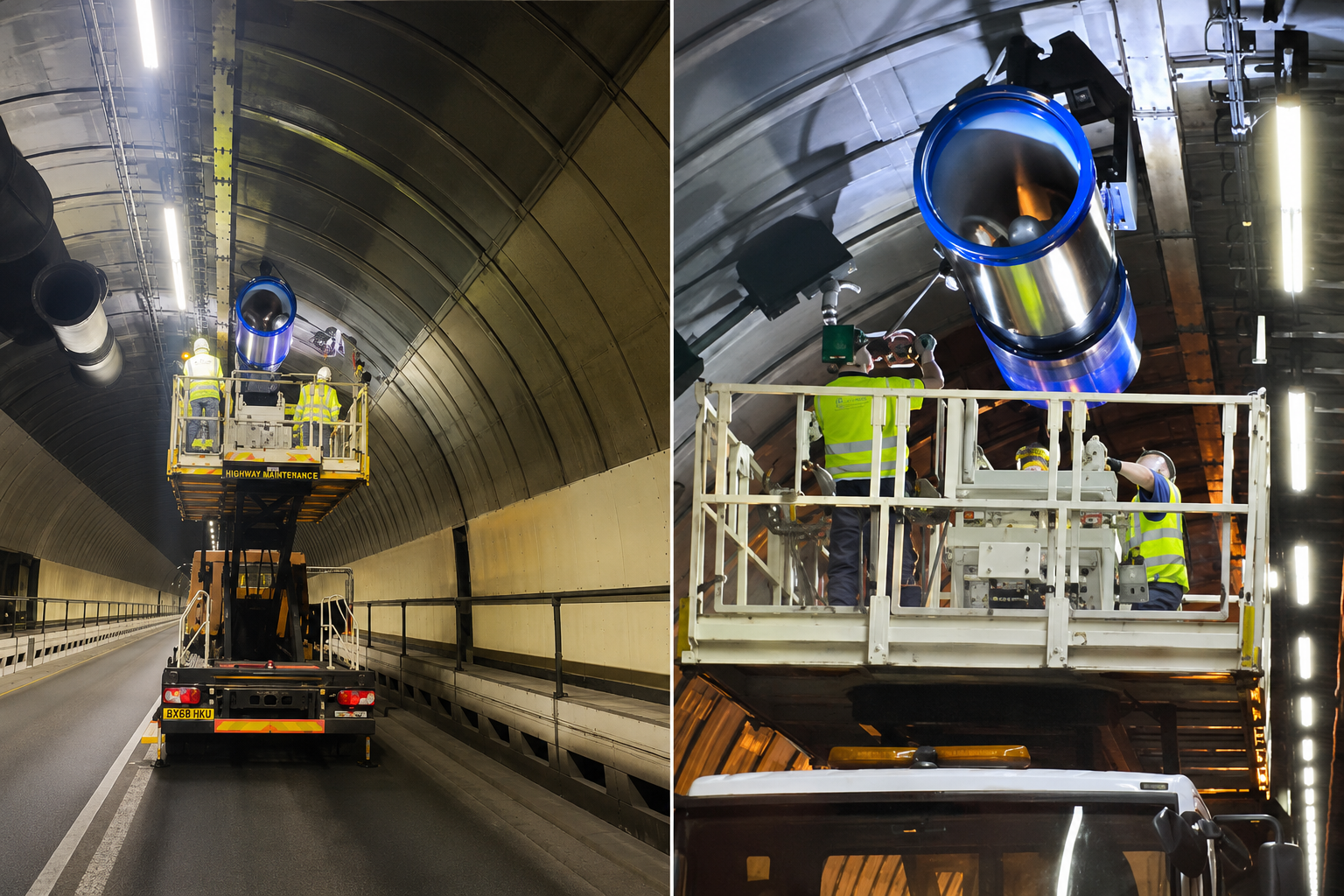
NXTGEN's Tunnel Jet Fan Inspection system changes what's possible within each closure. A custom sensor payload, attached to a reach pole and operated from an EWP, inspects each fan from the exterior. The operator stays in the basket. No one enters the housing. Set-up is faster, throughput is higher, and the sensor captures visual condition and dimensional measurements simultaneously, to sub-millimetre accuracy.
More fans per closure. Fewer closures per inspection cycle. And a complete, consistent condition record for every fan inspected.
A bespoke sensor payload on a reach pole, operated from an EWP, inspects each jet fan from the exterior. The operator stays in the basket and no one enters the housing, while the payload captures visual condition and sub-millimetre dimensional measurements in a single pass.
An EWP is positioned alongside the jet fan. The operator extends the reach pole carrying the custom sensor payload to the face of the fan unit. No entry into the housing. No confined space permit required.
The sensor payload captures imagery and data across fan blades, housing, mounts, and fixings from the exterior. GPS metadata ties each capture to the specific fan asset in the network.
NXTGEN Inspect processes the captured data against the defined defect catalogue and component catalogue. Each component is assessed, each defect identified and classified, each finding scored against the severity and risk matrix.
High-quality cameras and integrated lighting on the sensor payload provide live visual feedback to the operator during the closure. Defects visible from the exterior are seen in real time, so the operator has immediate situational awareness of fan condition without leaving the EWP.
Captured data is processed at the edge during the inspection, then synced to the cloud at the end of the closure. NXTGEN Inspect runs a full AI analysis pass, delivering a validated condition report without requiring engineers to be present during the late-night closure.
Engineers access detailed inspection imagery and condition records from the office, reviewing high-quality captures at their desk. Each inspection record is retained for comparative analysis across cycles, enabling condition trends to be tracked and deterioration to be identified before it escalates.
Visual inspection across blades, housing, guards, mounts, fixings and cabling
Dents, impact damage and gouging across blades, housing, guards and mounts.
Surface and structural cracks across blades, housing and casing.
Chipping and material loss on blade edges and surfaces.
Surface and structural corrosion on blades, housing, fixings and mounts.
Visible damage to external power and control cabling and conduit.
Impeller dimensional inspection
Clearance between blade tip and housing, measured to sub-millimetre accuracy.
Individual blade pitch angle measured to sub-millimetre accuracy, with deviation from specification identified per blade.
The operator remains in the EWP throughout. No confined space permits, no standby rescue personnel, no one inside the housing. This removes the highest-risk element of the inspection process entirely.
By removing confined space entry overhead and completing visual and dimensional assessment simultaneously in a single pass, the NXTGEN system allows significantly more fans to be inspected within each closure window.
Engineers don't need to be present during late-night closures. High-quality cameras give operators real-time visual feedback in the field. Data syncs to the cloud at closure end, and engineers review inspection imagery from the office.
Every fan assessed against the complete defect catalogue and component catalogue, the same standard applied to fan one and fan one hundred. No inspector variation, no confined-space fatigue affecting assessment quality.
Every finding scored and ranked by severity and risk before it reaches the maintenance team. The output is a prioritised, evidence-backed maintenance programme, so the asset owner knows the condition of every fan and what needs attention first.
| Capture system | Custom sensor payload on reach pole, operated from EWP by a single operator |
| Capture position | Exterior of fan unit, no housing entry required |
| AI platform | NXTGEN Inspect, defect detection and classification against defined catalogue |
| Workflow and reporting | NXTGEN Flow, structured condition reports, prioritised work orders, network dashboard |
| Defect classes | Visual inspection across blades, housing, guards, mounts, fixings and cabling, plus impeller dimensional inspection (blade tip clearance and pitch angle to sub-millimetre accuracy) |
| Dimensional analysis | Blade tip clearance and blade pitch angle, measured to sub-millimetre accuracy |
| Field feedback | High-quality cameras and integrated lighting, real-time visual feedback to operator during closure |
| Data architecture | Edge processing during closure + cloud sync at closure end for full AI analysis pass |
| Office review | Engineers access full-resolution inspection imagery and condition records from the office post-closure |
| Comparative analysis | Inspection records retained across cycles, condition trends tracked over time |
| Report format | Per-fan structured condition report with severity rating and risk score |
| Integration | Asset management system compatible (API available) |
Traditional jet fan inspection requires personnel to enter the fan housing, a confined space suspended from the tunnel ceiling. This requires confined space permits, standby rescue personnel, coordination with tunnel operations, and in most cases some form of traffic management. The safety overhead is significant, which in practice limits inspection frequency and thoroughness.
Yes. The NXTGEN Tunnel Jet Fan Inspection system uses a custom sensor payload on a reach pole, operated from an EWP. The payload is positioned at the exterior of each fan unit, capturing the data needed for a complete condition assessment without anyone entering the housing. Confined space entry is eliminated entirely from the inspection process.
Jet fan inspections typically require a tunnel closure, usually scheduled in early-morning hours to minimise traffic impact. The NXTGEN system doesn't eliminate that requirement, but it significantly increases how many fans can be inspected within each closure window. By removing confined space entry overhead and completing visual and dimensional capture in a single pass, inspection throughput per closure is substantially higher, reducing the total number of closures required to complete a full inspection programme.
The system inspects fan blades (cracking, erosion, deformation, impact damage, corrosion), housing (corrosion, structural damage, guard condition), suspension mounts and fixings (mount condition, fastener integrity, anti-vibration components), external cabling and conduit, and dimensional parameters including blade tip clearance and blade pitch angle.
Manual inspection in a confined fan housing places inspectors in a physically demanding, high-risk environment where personal safety is a primary concern throughout the assessment. Applying a complete defect register reliably under those conditions is difficult, and inspectors document what they can see and what is salient in the moment. The NXTGEN system removes the physical constraints entirely. The sensor captures the data; the AI applies the full catalogue from a detached, controlled process.
No. The sensor payload provides real-time visual feedback to the operator in the field during the closure. All captured data is processed at the edge during the inspection and synced to the cloud when the closure ends. Engineers access full-resolution inspection imagery and condition records from the office, reviewing findings at their desk rather than at 2am in a tunnel.
A structured condition report is generated automatically for each fan unit: component condition, defect classification, severity rating, and maintenance priority. All records are consolidated in NXTGEN Flow, giving the asset owner a network-level dashboard across the full tunnel ventilation system.
Inspection frequency is typically set by the tunnel operator's maintenance programme and regulatory obligations. Because the NXTGEN system removes the safety overhead and operational disruption of traditional inspection, more frequent inspection cycles become practical within the same resource budget, improving condition visibility and reducing the risk of undetected deterioration between cycles.
Yes. NXTGEN Inspect supports ongoing learning and organic improvement. Some detection capabilities are available from day one. Others develop and improve through real-world use: training data expands, models are refined based on field findings and operator feedback, and detection capability grows to match the specific defect patterns of your tunnel infrastructure. The platform continuously improves to meet the demands of your inspection programme over time.
Yes. NXTGEN Flow outputs structured data compatible with common asset management systems, with API integration available for direct connection to the tunnel operator's existing maintenance and work order platforms.
Tell us about your tunnel ventilation inspection programme.