- If inspection findings don't become trusted work orders, the program stalls
- Integrations must preserve evidence and context, not just defect labels
- Severity thresholds and human review are essential for trust
- Track the full loop: finding → work order → completion → outcome
- Start with a minimum viable integration that is simple, traceable, and scalable
Introduction: Where Inspection Programs Break
CMMS/EAM integration for inspection is where most programs fail. The system detects an issue. A report is generated. A dashboard updates. And then nothing happens.
Because the connection between inspection findings and maintenance workflows is: Weak, Incomplete, Untrusted.
When findings do not translate into actionable work orders: Planners see noise, Operators ignore alerts, Reliability teams lose confidence.
Inspection only creates value when it drives trusted, traceable maintenance action.
What "Good" Integration Looks Like
A high-performing integration delivers: Traceable evidence with every finding, Clear severity logic, Defined review and approval workflows, Consistent asset mapping, Feedback from maintenance completion.
Good integration does not automate everything. It automates the right steps while preserving trust.
Why Inspection Integrations Fail
Most failures happen because teams skip the operating model. Common issues: No asset hierarchy alignment, Missing severity thresholds, No evidence context, No review workflow, No feedback loop.
Result: Alerts become noise, Work orders lose credibility, The system gets ignored.
Minimum Viable Integration Pattern
Start simple.
Core Data Fields: Asset ID, Finding type, Severity level, Timestamp, Evidence link, Suggested action, Review status.
Basic Workflow:
- Inspection finding created
- Evidence attached
- Severity applied
- Review rule triggered
- Work order created (if criteria met)
- Completion status returned
Why This Works: Simple to implement, Traceable, Scalable.
Preserve Evidence and Context (The Trust Layer)
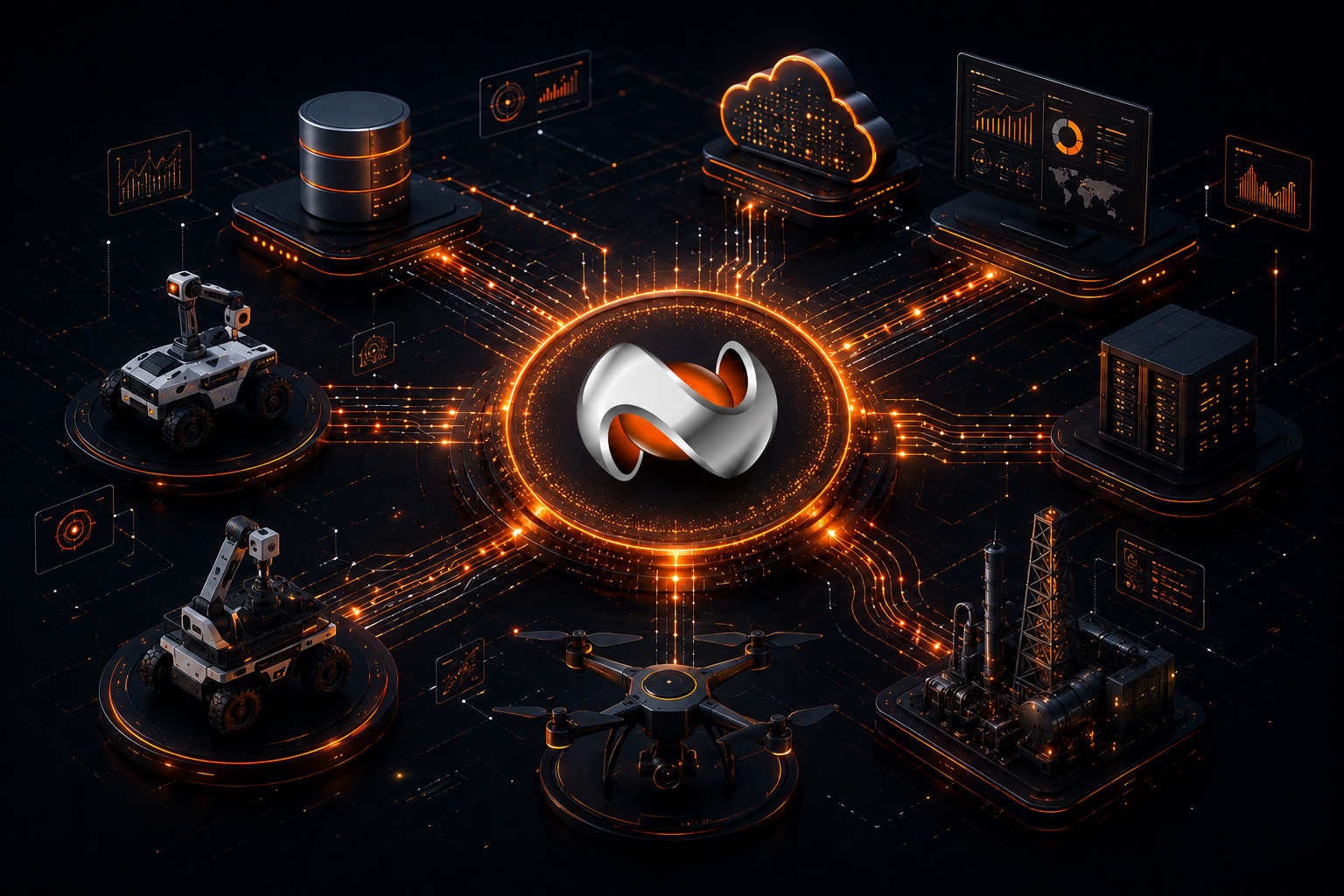
A work order should never say:
"AI anomaly detected"
It must include: Asset identifier, Inspection route, Timestamp, Visual or thermal evidence, Finding classification, Severity rationale, Review status, Suggested action.
Example Data Model:
| Field | Purpose |
|---|---|
| Asset ID | Links to maintenance hierarchy |
| Route ID | Context of inspection |
| Timestamp | Traceability |
| Evidence URL | Access to raw data |
| Finding Type | Defect classification |
| Severity | Prioritization |
| Review Status | Trust indicator |
| Recommendation | Action guidance |
No evidence = no trust.
Severity and Human-in-the-Loop Review
Automation without control creates noise.
| Severity | Description | Action |
|---|---|---|
| Low | Monitorable issue | Log and trend |
| Medium | Requires planning | Create reviewed request |
| High | Immediate concern | Escalate and act |
When to Use Human Review: Low model confidence, Critical assets, High-cost false positives, Shutdown-level decisions.
Human review should protect trust—not slow the system.
Data Model Design
A strong integration requires a shared data structure.
Core Entities: Asset, Inspection event, Finding, Evidence object, Work order, Outcome.
Key Design Questions: How is asset hierarchy aligned?, What IDs are authoritative?, How is evidence stored and linked?, What happens on system mismatch or failure?
End-to-End Workflow (Finding → Action → Outcome)
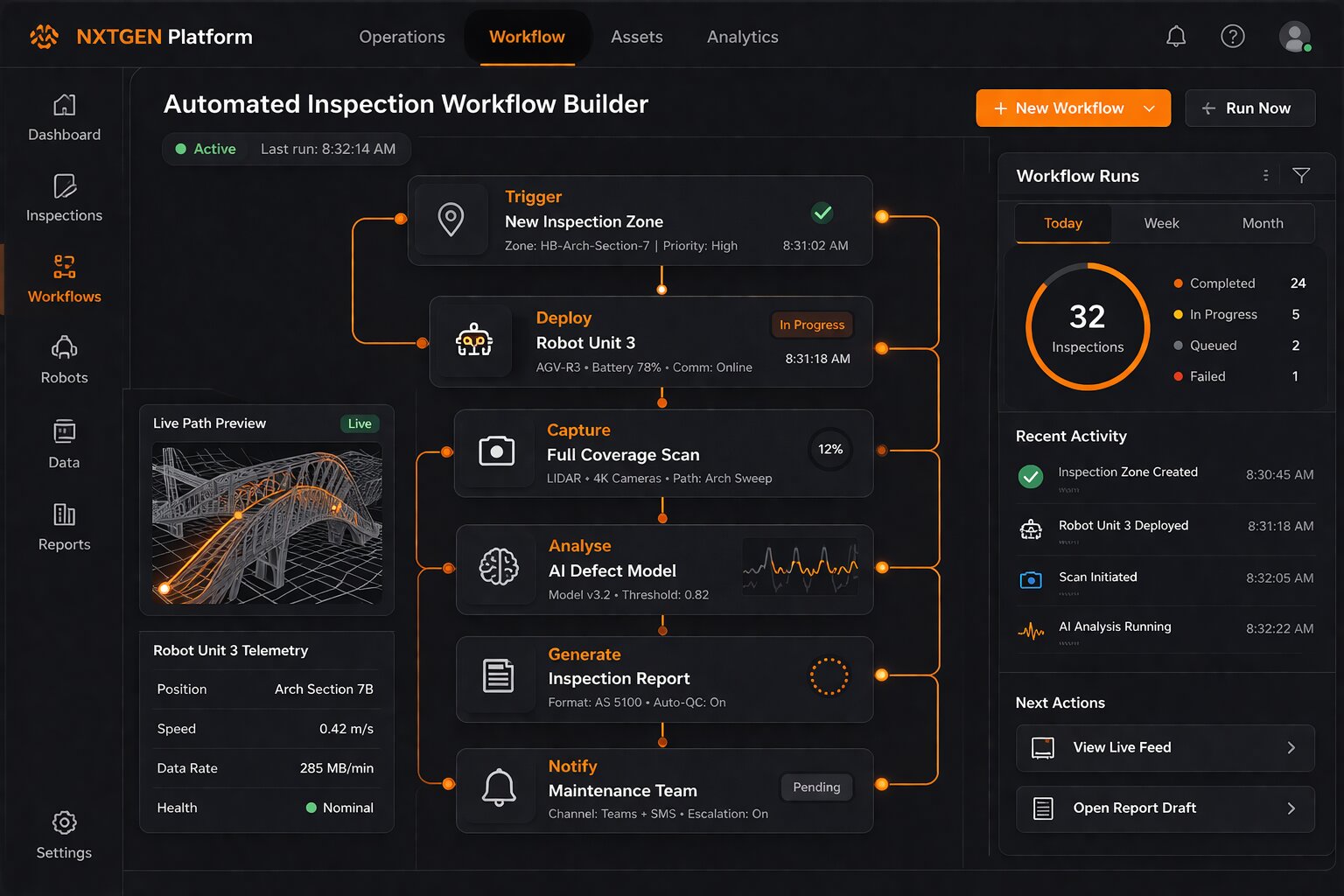
- Inspection completed
- Finding detected
- Evidence stored
- Severity assigned
- Review rule applied
- Work order created
- Maintenance executed
- Outcome recorded
- System updated
Without feedback: Systems cannot learn, Noise is not reduced, Value is not proven.
Common Failure Modes
- Too Many Work Orders — Fix: apply thresholds and review rules
- Lost Evidence — Fix: pass structured links and metadata
- Asset Mismatch — Fix: align hierarchy before scaling
- One-Way Integration — Fix: return completion data
- No Governance — Fix: define ownership and approval
Governance Model
| Area | Owner |
|---|---|
| Asset Mapping | Reliability Team |
| Thresholds | Engineering |
| Work Order Rules | Maintenance Planning |
| Evidence Storage | IT / Platform |
| Change Approval | Cross-Functional Governance |
Integration without governance creates noise at scale.
Why Full-Stack Integration Wins
Inspection tools alone do not solve workflows. What works: Structured evidence, Trusted thresholds, Controlled review, Work order integration, Feedback loops.
The inspection system is not separate from maintenance. It is part of the same operating system.
FAQ: CMMS/EAM Integration for Inspection
What is CMMS/EAM integration for inspection?
It connects inspection findings to maintenance systems to create traceable work orders.
Why do integrations fail?
Because evidence, hierarchy, review logic, and governance are not defined.
Should every finding create a work order?
No. Thresholds and review rules should determine escalation.
What builds trust?
Evidence, context, review logic, and feedback from completed work.
Conclusion
Inspection programs do not fail because data is missing. They fail because findings do not become trusted actions.