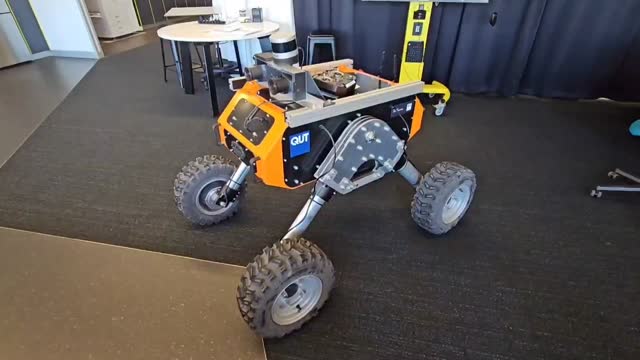
- A demo is irrelevant if the vendor does not own deployment, integration, and operating model clarity
- Evaluate the workflow: capture standards, QA, reporting, escalation, and work-order creation
- Demand evidence of harsh-environment operations and field serviceability
- Confirm integration scope: CMMS/EAM, retention, traceability, governance
- Decide whether you want a product supplier or an outcomes partner
Introduction: Why Most Autonomous Inspection Vendor Checklists Miss the Point
Many autonomous inspection vendor evaluations go wrong for a simple reason: they are too influenced by the demo. Using a rigorous autonomous inspection vendor checklist is the only reliable way to assess whether a vendor can actually deliver in your environment. Demos are designed to show capability under controlled conditions. Buyers need to know: Can this system survive deployment? Will the evidence be trustworthy? Who owns integration? Who owns outcomes? What happens after the pilot? Vendor evaluation should focus on workflow, lifecycle delivery, operational ownership, and integration — not visual impressiveness.
This guide provides a practical checklist and scoring model for evaluating autonomous inspection vendors beyond the demo.

What "Good" Looks Like in Vendor Evaluation
A strong vendor evaluation process reveals whether the workflow is real, whether the operating model is defined, whether harsh-environment deployment is proven, and whether the vendor owns the pieces that actually determine success.
The difference between a vendor who passes evaluation and one who does not is not hardware quality. It is the depth and honesty of their answers to questions about workflow, deployment, integration, and accountability.
Product Supplier vs Outcomes Partner
This is one of the most important buying decisions in any autonomous inspection procurement process.
Product Supplier
A product supplier provides the robot, software, and possibly training. They leave to the buyer: route design, integration, data governance, operating model design, service, and long-term improvement.
Outcomes Partner
An outcomes partner provides workflow design, deployment planning, integration support, evidence model design, serviceability and operating support, and accountability for results. They own the outcome, not just the product.
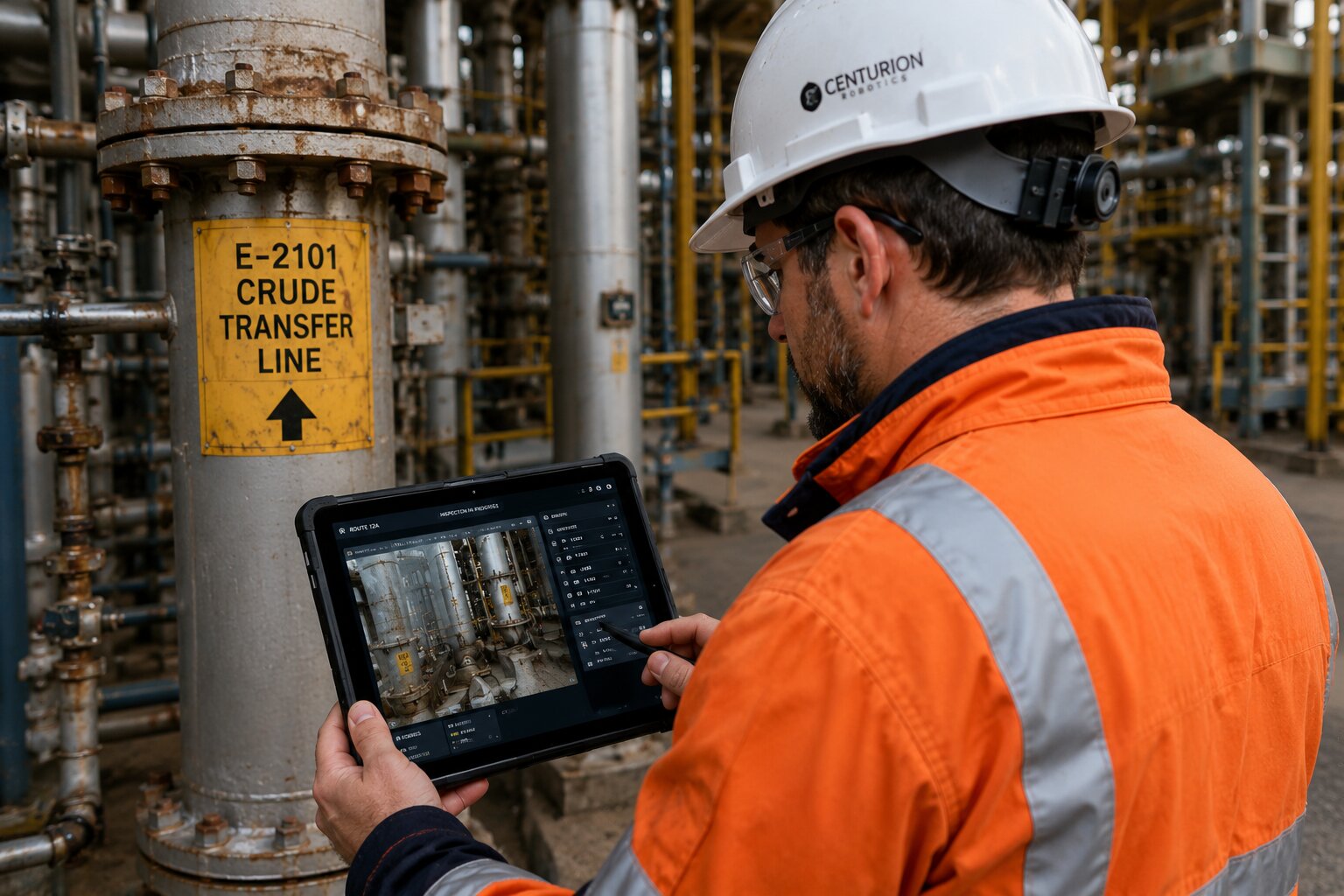
The more internal capability you lack, the more dangerous a product-only purchase becomes.
Before shortlisting vendors, decide which model fits your organisation's internal capability. That decision should drive how you weight every other criterion on the autonomous inspection vendor checklist.
Autonomous Inspection Vendor Checklist: Four Core Categories
An effective autonomous inspection vendor checklist must cover workflow capability, deployment capability, integration capability, and operating model clarity. Vendors who cannot answer clearly in all four areas carry delivery risk.
Workflow Capability
- Are capture standards defined and repeatable?
- Are inspection routes documented and version-controlled?
- Is evidence quality controlled at capture or only at review?
- Are escalation rules documented and owned?
- Is there a defined finding-to-action workflow?
Deployment Capability
- Can the vendor explain site constraints and how the design handles them?
- Is there a deployment readiness process with defined gates?
- Are failure modes identified and recovery procedures documented?
- Is field serviceability addressed with clear ownership?
Integration Capability
- What is the CMMS/EAM integration pattern — push, pull, or manual?
- What evidence retention model is used and for how long?
- How does asset hierarchy mapping work in the integration?
- Are governance and traceability requirements addressed explicitly?
Operating Model
- Who runs the system day-to-day after deployment?
- Who reviews findings and makes escalation decisions?
- Who owns maintenance and system updates?
- How are software and route changes managed over time?
Scoring Model: How to Weight the Autonomous Inspection Vendor Checklist
Not all evaluation categories carry equal weight. This scoring model forces evaluation away from surface-level impressions and toward the things that determine long-term value.
| Category | Weight | Key Questions |
|---|---|---|
| Workflow maturity | High | Does the solution define route, evidence, review, and escalation? |
| Deployment realism | High | Can the vendor show harsh-environment evidence and recovery planning? |
| Integration depth | High | Is there a real work-order and traceability model? |
| Serviceability | Medium | Can the system be maintained and supported in the field? |
| Governance | Medium | Are changes controlled and evidence retained appropriately? |
| Demo quality | Low | Does the demo reflect realistic operating conditions? |
Demo quality is weighted low deliberately. A polished demo that cannot be backed by workflow documentation, integration design, and deployment evidence should score low — regardless of how impressive the hardware appears.
Red Flags: What to Watch for in Autonomous Inspection Vendor Evaluations
- Demo-first, workflow-later — No clear explanation of repeatable route design or operating model. The vendor can show you the robot but cannot describe how findings become work orders.
- Undefined integration scope — "We have an API" used as a substitute for an actual integration plan. Integration design should be documented before procurement, not after.
- Weak harsh-environment evidence — No detailed discussion of maintenance requirements, ingress protection, vibration tolerance, cleaning requirements, or service windows. Claims without evidence are not verification.
- No governance model — Unclear ownership of thresholds, software updates, and evidence retention. Governance gaps become operational failures after deployment.
- No lifecycle support plan — Pilot support looks strong, but long-term support is undefined or vague. The transition from pilot to operation is where many programs fail.

RFP Outline: What to Include When Requesting Proposals
A well-structured RFP forces vendors to answer the right questions before evaluation begins. Include these sections in any autonomous inspection vendor RFP:
- Inspection objectives and success metrics
- Asset classes and route expectations
- Evidence requirements and quality standards
- Environmental constraints and site conditions
- Integration requirements — CMMS/EAM system, data fields, and traceability
- Maintenance and support expectations
- Reporting and escalation workflow requirements
- Change control expectations for software, routes, and thresholds
Vendors who respond with vague answers or defer key design decisions to post-award should be scored down. The RFP is the first test of deployment maturity.
Example Vendor Checklist Categories
| Category | Example Questions |
|---|---|
| Workflow | How are findings reviewed and escalated? Who owns the review decision? |
| Evidence | What context is retained with each finding? How long is evidence stored? |
| Deployment | What site assumptions does the design depend on? How are those validated? |
| Serviceability | What field maintenance is expected and by whom? What is the response time? |
| Integration | How do findings become work orders in the CMMS/EAM? Who owns that mapping? |
| Governance | How are model, route, or threshold changes controlled and approved? |
Why Full-Stack Vendors Score Better on the Autonomous Inspection Vendor Checklist
A full-stack vendor can usually answer how the route is designed, how evidence is governed, how integration works, how service is delivered, and how outcomes are measured. That is not because they have better hardware — it is because full-stack delivery recognises that real inspection value is created after the demo.
Partial vendors — those who supply hardware or software but not the full delivery stack — leave gaps that the buyer must fill. Those gaps are the most common source of failed inspection programs. When evaluating against the hazardous area inspection automation criteria or the broader manual vs autonomous inspection framework, full-stack delivery consistently produces better operational outcomes.
FAQ: Autonomous Inspection Vendor Evaluation
What should I look for in an autonomous inspection vendor?
Workflow maturity, deployment realism, integration depth, serviceability, and governance. A vendor who scores well on all five categories is demonstrating the capability to deliver, not just to demo.
Is a good demo enough to make a decision?
No. A demo does not prove long-term deployment success. It proves the system works under controlled conditions. Evaluation should focus on the workflow, the operating model, and the integration design — not the demo performance.
What is the biggest mistake in autonomous inspection vendor evaluation?
Overweighting hardware performance and underweighting integration and operating model design. Hardware is visible and impressive. Integration gaps and governance failures are invisible until after deployment — and expensive to fix.
What defines an outcomes partner?
A vendor that owns or supports deployment, integration, workflow design, and measurable results. An outcomes partner is accountable for the inspection program succeeding — not just for delivering equipment. Review the inspection automation cost model to understand how operating model decisions affect total program cost.
Conclusion
Vendor evaluation should not be about who has the most impressive demo. The right vendor for any autonomous inspection program is the one that can deliver a trusted, supportable, integrated inspection outcome in your real environment — not just a compelling pilot.
Use this autonomous inspection vendor checklist to move evaluation away from surface impressions and toward the questions that determine whether a deployment will succeed. Weight workflow, deployment, integration, and operating model above demo quality. Treat unanswered questions as risk. And decide early whether you need a product supplier or an outcomes partner — because that decision shapes everything else.